- Wild Style Magazine
- Roofing
- What roof underlayment does and which kind goes under shingles
What roof underlayment does and which kind goes under shingles
Learn what roof underlayment does to protect your home and how synthetic roof underlayment compares to traditional asphalt felt under shingles.
Words by Reuben Stillwagon6 min to read
Roof underlayment is the waterproof layer between the wood roof deck and the shingles. It stops wind-driven rain and trapped moisture from rotting the wood. Many roofs now use synthetic roof underlayment, though asphalt felt is still used and can keep the roof dry.
What roof underlayment does between the deck and shingles
Shingles overlap to shed water down the slope of your roof. They do not form a sealed waterproof barrier on their own. High winds can blow rain up and under the overlapping edges during a storm.
Snow and ice can back up under the bottom rows of shingles in the winter. If water gets past the top layer, it hits the underlayment and rolls down to the gutters.
The underlayment protects the bare plywood or oriented strand board deck from rotting. Wood can rot when trapped moisture has no way to dry out, and mold can weaken the roof deck.
You may end up paying for new plywood before you can install a new roof. The extra waterproof sheet prevents this hidden damage.
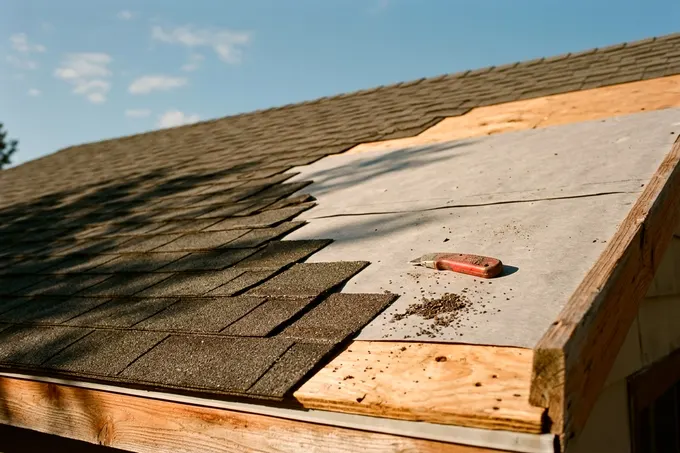
The underlayment also protects your home during the construction project. It keeps rain out of the house after the old roof comes off and before the new shingles go on. You can read about how a roof replacement works to see why that middle step matters.
An unprotected wood deck can absorb moisture from morning dew. Applying shingles over damp wood traps that moisture inside the roof structure. The underlayment provides a dry, predictable surface for the shingles to stick to.
Roofers roll the material out horizontally across the roof. They start at the bottom edge and work their way up to the peak. Each upper row overlaps the row below it. This overlap ensures water flows over the seams and never gets behind the sheets.
Traditional felt underlayment and where it falls short
Roofers have used asphalt saturated felt paper for a long time. It is made of paper or fiberglass fleece soaked in asphalt to repel water. You might hear it called tar paper.
Suppliers sell it in standard and heavy weights. The heavier felt offers more protection and resists tearing better than the thinner version.
Felt is often the lower priced option, and it has a long record of use under shingles.
Felt has a few serious drawbacks for the crew installing it. The rolls are heavy and hard to carry up a ladder. Felt tears easily under heavy work boots. A roofer can slip and fall if the paper tears underfoot on a steep pitch.
Felt also absorbs moisture if it sits out in the rain. Wet felt paper wrinkles and buckles on the roof deck as it dries. Those wrinkles can telegraph through thin asphalt shingles and leave the finished roof looking wavy.
Wet felt requires the crew to wait for it to dry and flatten out before they can nail down the shingles.
Synthetic roof underlayment and how it is fastened
Synthetic roof underlayment is made from woven polypropylene or polyethylene. It looks and feels like the material used for heavy-duty blue tarps. The woven plastic is incredibly strong. It resists tearing under the weight of an installer.
The rolls are often lighter than felt rolls, which saves the crew effort on the ladder.
Manufacturers also print grid lines on the plastic surface. These lines help the installers lay the shingles in perfectly straight rows without snapping chalk lines on every course.
Fastening the plastic sheets takes specific hardware. Synthetic underlayment must be fastened with cap nails or cap staples, while felt can use staples or roofing nails. Cap nails have a wide plastic head that holds the synthetic fabric tight against the wood.
Regular staples and nails can leave holes in the plastic that let water seep through. Cap staples do the same job with a wide plastic strip.
Synthetic material generally offers better traction than felt, though some products can be slippery, so roofers still take care on steep slopes.
It also tends to lay flat, while felt wrinkles when wet. Ask your contractor about the price difference and which option suits your roof. You can ask your contractor how it pairs with the types of roof shingles they recommend for your house.
Self adhering membranes at edges and valleys
Underlayment comes in sheets that overlap. Some parts of the roof need a complete seal that sticks directly to the wood deck. Roofers use a self adhering membrane called ice and water shield in these vulnerable spots.
This material is made of thick rubberized asphalt with a sticky backing. You peel off a plastic release film and press it onto the bare wood. It bonds tightly to the deck.
The rubberized asphalt forms a watertight gasket around every nail driven through it. This makes it a common choice for valleys where two roof slopes meet and channel heavy water flow. Roofers may also use it around plumbing vent pipes and skylights before rolling out the standard underlayment.
It often goes along the eaves at the bottom edge of the roof. Ice dams form here in cold climates. Melting snow runs down the warm roof and freezes when it hits the cold overhang. The ice builds up and forces water backward under the shingles.
Building codes in cold regions often call for ice and water shield along the eaves. Your local building department can tell you how far the membrane must extend up the roof. This prevents backed up water from leaking into the living room ceiling. The rest of the roof then gets the standard synthetic or felt underlayment overlapping the top edge of the sticky membrane.
How long underlayment can sit exposed
Sometimes a roofing crew installs the underlayment and has to wait before laying the shingles. Weather delays or supply shortages can stall the project.
Felt cracks and splits in cold weather and tears easily in high winds, so it should not sit exposed for long.
Synthetic options are made to tolerate some exposure. Synthetic underlayments are generally exposed for four to 12 months, and plastic starts to degrade in UV light, so roofing should follow quickly. The exact exposure limit depends on the thickness and UV resistance of the specific plastic sheet used.
You want to limit this exposure time. UV light degrades the plastic over time. Wind is another threat to exposed underlayment. Even with proper cap nails, a severe storm can damage the exposed sheets.
You want the heavy asphalt shingles installed over the protective layer as soon as possible. The underlayment is only meant to be a backup defense system. The shingles provide the primary shield against sun and rain. Talk to your contractor if the exposed sheets sit outside and ask them to inspect the material for tears or sun damage before they cover it up.
Questions to ask your roofer about the underlayment
You should confirm exactly what goes under the shingles before you sign a contract. A good roofer will explain their process and answer your questions directly.
- Ask if the base quote includes asphalt felt or a woven synthetic sheet.
- Find out the exact price to upgrade to a synthetic plastic roll if the bid assumes standard paper.
- Confirm the crew uses plastic cap nails or cap staples to secure the synthetic sheets.
- Ask where the ice and water shield will go, such as valleys and around the chimney.
- Ask how far the sticky membrane extends up the roof and whether local code sets a minimum.
- Ask what the crew will do to protect the exposed wood deck if a sudden rain storm hits.
Ask your local building department what permits they require for a roof replacement. They can tell you what the local code says about underlayment and ice shields, and whether an inspection is required. Make sure your contractor pulls the right permits and follows the local rules.