- Wild Style Magazine
- Roofing
- A yearly roof check you can mostly do from the ground
A yearly roof check you can mostly do from the ground
A regular roof maintenance routine helps you spot trouble early and prevent leaks. Learn how to check shingles, gutters and flashing from the ground.
Words by Reuben Stillwagon8 min to read
A solid roof maintenance routine happens on a regular schedule with your feet planted safely on the grass. You can spot trouble early by walking the yard with binoculars and keeping the gutters clear. Catching small problems prevents serious leaks.
Walk the yard and look at the roof lines
Start by standing in the street or at the back of your property to look at the very top of the house. The ridge line must run perfectly straight across the building. A sagging ridge can point to structural trouble underneath, so call a roofer if you see one. The rafters might be damaged or the wooden decking could be rotting away.
Move around to the sides of the house and look at the edges. The roof edges should look crisp and straight. Drooping edges often mean water has rotted the wooden fascia boards behind the gutters.
You want to inspect the roof from multiple angles. Sunlight plays tricks on the eyes. A bump or dip that is invisible at noon might cast a long shadow in the late afternoon. Walk around the entire house in the morning and again near sunset.
Pay attention to any transitions where a porch roof meets the main house. These joints take a lot of weather. The lines should look tight and flat. Uneven sections suggest the underlying wood has shifted or softened.
Clear gutters and downspouts
Gutters manage the rain rolling off your house. Clogged gutters can force rainwater to back up under the bottom row of shingles. That backed up water can rot the roof deck and leak into your exterior walls.
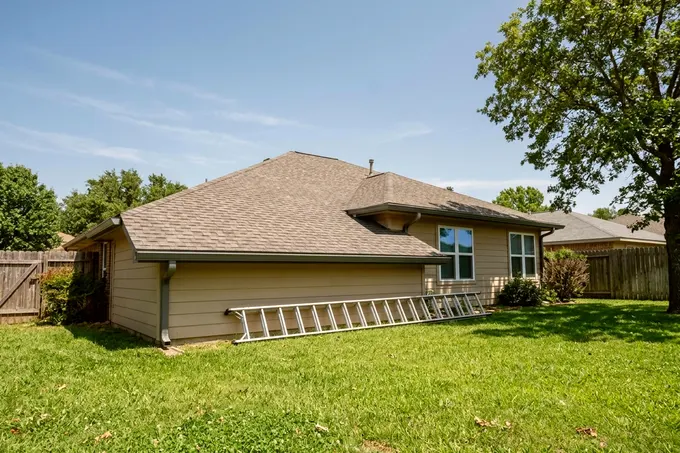
You can clear gutters from a sturdy ladder used as the maker directs, or hire a pro if heights worry you. Move the ladder frequently rather than leaning far to the side. Scoop the leaves and mud out by hand. You can also use a specialized scooping tool on an extension pole to pull debris out while standing on the ground.
Look closely at the mud you scoop out. Asphalt shingles shed a few colored granules over time. Finding a thick layer of heavy grit in the gutters can mean the roof is aging. The shingles are losing their protective top layer.
Test your work with a garden hose by running water down the cleared gutter and watching the downspouts. The water must flow out quickly and empty far away from the foundation. A slow trickle means leaves are jammed inside the vertical pipe, so you will need to take the downspout apart to clear a stubborn clog. Check that the downspout extensions push the water completely away from the basement or crawlspace.
Spot lifted, cracked or missing shingles
Grab a pair of binoculars for this step. Binoculars let you inspect the roof surface up close without climbing a ladder. Rest your elbows on a fence or a parked car to hold the lenses steady. Focus on one small section of the roof at a time and work your way across the surface slowly.
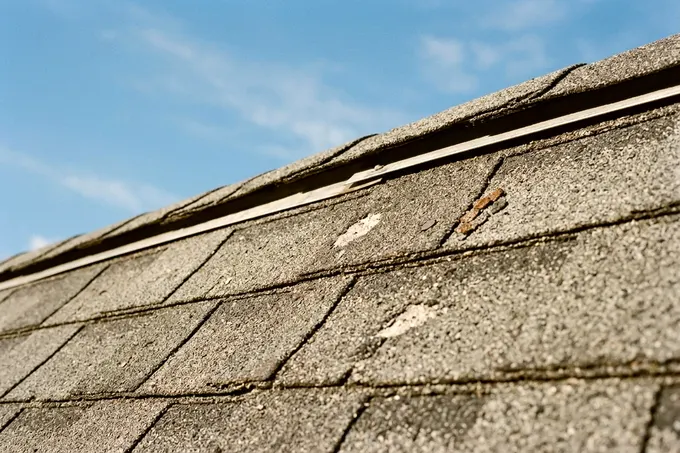
Look for missing shingle pieces first. A missing section leaves a dark, uneven gap in the pattern. Wind easily tears off aging shingles. The exposed area leaves the lower layers completely unprotected from rain.
Check for curled edges. Shingles dry out as they bake in the sun year after year, causing the edges to curl up or cup in the middle. Curled shingles catch the wind, snap off easily and let blowing rain reach the materials underneath. Learning what roof underlayment does helps explain why those top shingles need to stay perfectly flat.
Scan for cracks across the shingle face. Sun exposure and temperature swings make asphalt brittle. Water seeps into these cracks and freezes during winter weather, and the expanding ice can break the shingle apart.
Watch for shingles that look slightly lifted. The factory adhesive seals each row to the one directly below it. High winds can break that tar seal. A lifted shingle might look fine from a distance, but it flaps during storms and lets water blow underneath.
Check flashing around chimneys and vents
Flashing refers to the metal strips that seal joints and roof penetrations. Many leaks start at the flashing rather than in the open field of shingles. You will find flashing around chimneys, skylights and plumbing vents.
Use your binoculars to study the metal around your chimney to ensure the metal strips sit flat against the bricks and the roof. Look for rusted spots or metal that has bent away from the wall. The sealant along the top edge of the flashing can dry out and crack. Missing chunks of sealant mean water is already getting behind the metal.
Look at the plumbing vents sticking out of the roof. These vertical pipes usually have a rubber or plastic boot around the base. Sun exposure degrades the rubber over time, so the boot will eventually crack and peel away from the pipe. A split rubber boot can cause a leak down the outside of the vent pipe into your attic.
Check the metal valleys where two roof slopes meet, since rain pours down these valleys during a heavy storm. The metal must be smooth and free of rust. Debris often collects in valleys and holds moisture against the metal. Clear out any trapped leaves to keep the flashing completely dry.
Trim branches that touch the roof
Trees add shade and privacy to a yard. Branches that reach the roof can cause damage. Wind blows the branches back and forth across the shingles. The wood scrapes away the protective granules and leaves the bare asphalt exposed to the sun.
Overhanging branches also drop leaves and pine needles directly onto the roof. This debris collects in the valleys and clogs the gutters. Trapped leaves hold water against the shingles and speed up the deterioration process. Shade from close branches can keep morning dew from drying off the roof.
Branches create a convenient bridge for squirrels, raccoons and mice. Animals use trees to reach your roof and look for weak spots to enter the attic. They can chew through plastic vent covers and rotting fascia boards to reach the warm attic.
Keep all branches trimmed a safe distance away from the roof line. You can cut small lower branches with a pole saw from the ground. Leave large branches, heavy limbs and anything near power lines to a professional tree service. Dropping a heavy limb onto your roof can cause serious damage.
Moss, stains and what is worth treating
You might notice dark streaks running down the slope of your roof. These dark streaks are usually an algae buildup. Algae thrives in humid areas and on shaded sections of the house. The dark stains look terrible, but they are mostly a cosmetic problem, so ask a roofer if you are unsure.
Moss presents a completely different problem because it grows in thick, green clumps along the shingle edges. The plant acts like a sponge. It holds rainwater against the roof surface long after a storm passes. That constant moisture can rot the materials underneath.
Moss also damages the shingles as it grows. The tiny roots reach under the shingle edges and lift them up. This breaks the adhesive seal and leaves the roof vulnerable to wind damage. Moss is worth removing to protect the life of the roof.
Avoid a pressure washer on asphalt shingles, because high water pressure can blast off the protective granules and damage the roof.
You can apply a liquid moss treatment from a garden sprayer, following the label, to kill the growth, following the product label. The dead moss will eventually dry up and wash away in the normal rain. You can ask a roofer to install a strip of zinc near the roof peak. Rainwater washes a tiny amount of zinc down the roof to help slow new moss.
If you can reach it safely from the ground, you can sweep the dead moss away with a soft broom. Wait for a dry day and brush downward toward the gutters. Brushing upward can damage the shingles. If you have steep slopes, hire a professional to handle the roof cleaning.
Look at the underside of the roof deck
Part of a good roof check happens inside the house. You can learn a lot about your roof by looking at the attic ceiling. Take a bright flashlight into the attic during the middle of the day and watch where you step.
Turn off the attic lights and look closely at the roof boards for these signs.
- Daylight shining through the wooden roof boards around pipes and vents
- Dark water stains on the rafters or the wooden decking
- Damp insulation directly under the roof slopes
- White or black mold patches on the wood
Any visible sunlight means water can get in too. A water stain tells you that the roof is already leaking. The leak might be small right now, but it will not fix itself. Feel the insulation below the stain to see if it is damp.
Check for mold on the rafters. Mold can grow when the attic lacks proper ventilation. Heat and moisture build up inside the trapped space. Poor ventilation can shorten the life of the roof.
When to bring in a roofer
A ground inspection tells you when to call a professional. You should never climb a steep roof or a two-story house yourself because the risk of a fall is simply too high. A professional roofer has the safety gear and the daily experience to walk steep pitches safely. Walking on an older roof can also damage the brittle asphalt if you step in the wrong place.
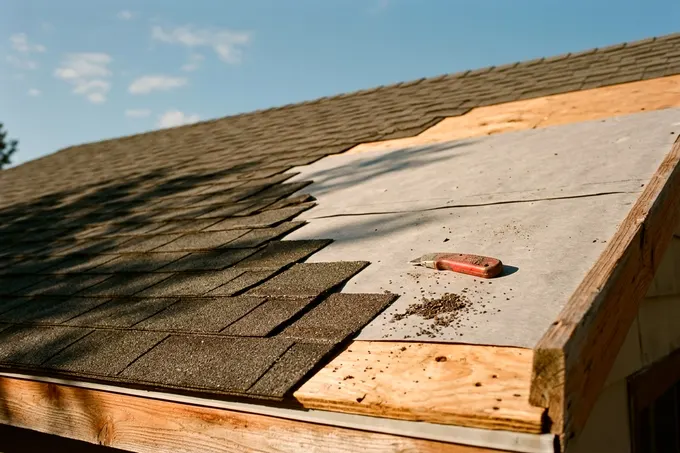
Call a roofer if you spot loose flashing or missing shingles. A few missing shingles can sometimes be patched quickly. Widespread curling or cracking can mean the roof is near the end of its life, so ask a roofer whether it needs replacing. If you are comparing new materials, a good roofer can discuss a metal roof or asphalt shingles for your house based on your local weather patterns.
Bring in a professional if you find a new leak in the attic. Water travels along rafters and underlayment before finally dripping onto the ceiling. The actual hole in the roof might be far away from the water stain you see. A professional knows how to track the water path back to the true source.
You should also hire a roofer if your house gets hit by heavy hail. Hail bruises asphalt shingles and knocks the protective granules loose, but this damage is notoriously difficult to spot from the ground. A professional inspection can catch damage you cannot see from the ground. After a major weather event, you will want to know exactly what to check on your roof and siding after a hail or wind storm to report any damage to your insurance company quickly.