
- Wild Style Magazine
- Roofing
- What happens during a roof replacement from bid to cleanup
What happens during a roof replacement from bid to cleanup
Learn exactly what happens during a residential roof replacement from spotting signs of wear to getting bids and signing off on the final cleanup.
Words by Reuben Stillwagon7 min to read
A residential roof replacement starts with spotting wear and gathering detailed bids from local companies. You choose a licensed contractor and sign a written contract. A crew tears off the old materials, repairs the wood deck and installs new underlayment. They nail down fresh shingles, clean the yard and hand over the warranty paperwork.
Spotting wear from the ground
You do not need to climb a ladder to know your roof is failing. Grab a pair of binoculars and stand in the yard. Look up at the surface for obvious damage and let the professionals walk on the steep pitches.
Look for missing shingles. High winds can lift weak tabs off the house. Check for curled edges along the bottom rows.
See if the colored granules have washed away and left smooth bare spots. Granules help protect the asphalt from the sun. When they wash into your gutters, the shingles may break down faster. Baking summers and freezing winters eventually end the life of an asphalt shingle roof.
Look closely at the roof lines. Sagging spots can point to damaged wood underneath, so have a pro look. Check the flashing around the base of the chimney.
If that metal looks bent or rusted, water may find a way in. Water spots on your interior ceilings can also point to a leak.
Deciding between a patch repair and a full replacement
Widespread wear across the whole house often means you need a new roof. A few damaged shingles from a fallen branch might only require a small patch. The right choice depends on the condition of the remaining materials.
A professional roofer evaluates the damage. They inspect the layers and check the decking for rot. If the shingles are brittle and cracking everywhere, simple repairs may not hold, since brittle material can break when the crew works next to it.
You make the final call on how to spend your money. The contractor will explain how much life remains in the rest of the roof. Ask the roofer what a repair would buy you and how much life the rest of the roof has before you decide.
Gathering written bids and comparing roofers
Finding the right contractor requires comparing multiple written estimates. Call several local roofing companies to look at your house. Ask them to write down exactly what they plan to do. The FTC says a written estimate should include a description of the work, materials, completion date and price.
Compare these documents side by side on your kitchen table. Look closely at the materials each company quotes. One might bid a standard basic shingle while another quotes a thicker architectural style. You can also explore options like a metal roof or asphalt shingles to see what fits your home best.
The Department of Energy says cool roofing should be considered whenever a roof replacement is being planned. Ask the bidders if lighter colors or reflective materials make sense for your climate. These materials reflect sunlight and can help keep the house cooler, mostly in warm climates.
Do not just look at the bottom line. The FTC advises not automatically choosing the lowest bidder. A suspiciously cheap bid can mean cut corners or hidden fees down the line. You want quality work that keeps the rain out.
Check every single company for proper licensing and insurance, as the FTC advises considering only contractors who are licensed and insured. Check the license with your own state's contractor licensing board, and ask each roofer for proof of insurance. California's Contractors State License Board offers an online license check that shows whether a roofer is licensed and also shows bond, workers' compensation insurance and any legal actions against the license. Check whether your state's board offers a similar lookup.
Signing a clear and protective contract
Every detail of the job belongs in a written contract before work begins. Verbal promises will not protect your budget if problems arise. The contract should state the price and list the materials the crew will use, such as the brand of underlayment and the color of the shingles. Checking out the types of roof shingles beforehand helps you understand the terms they write down.
Pay close attention to the payment schedule. The FTC notes that some states limit how much a contractor can ask for as a down payment and advises never making the final payment until the work is done. You should hold the last check until the yard is clean and the roof looks right.
Look for a cancellation clause in the paperwork. If you sign a contract at home, the FTC says it should include a written statement of your right to cancel within three business days. This rule gives you time to change your mind.
Make sure the contract details the cleanup process. It should state who pays for the dumpster rental. It should also explain what happens if the crew finds rotten wood under the old shingles. Ask whether the contract sets a price for replacing rotten wood.
Pulling building permits and passing city inspections
Many local building departments require a permit to replace a roof, so check yours. Your contract should say who gets the permit, and the roofer should handle the application. The FTC lists a contractor asking you to get the required building permits yourself as a warning sign.
A professional roofer should know the local building codes and handle the paperwork. The permit lets the building department know about the project and inspect the work.
Where a permit is required, the building department may inspect at a certain stage of the job and again when the roof is complete. Ask your roofer or the department which inspections apply.
Tearing off the old materials and checking the wood deck
The physical work starts by stripping the house down to bare wood. The crew typically sets up a dumpster or debris trailer nearby and may cover garden beds and patios with tarps. Tearing off old materials creates a massive mess of dust and sharp objects. Workers start at the top and toss the old shingles directly into the dumpster below.
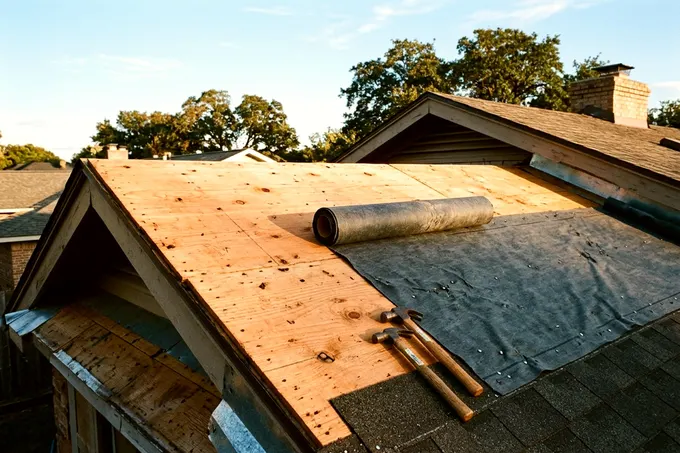
Once the roof is bare, the contractor inspects the wood decking. They look for water damage and soft spots across the plywood. They pull up any rotten sheets and nail down fresh wood. A solid, flat deck is a major factor in how well a new roof holds up.
Workers then roll out the underlayment, a water barrier that goes right over the bare wood to block wind-driven rain. They fasten it down following the manufacturer's instructions. They also nail metal drip edges along the bottom roof lines. The drip edge helps direct water into the gutters and away from the wood trim.
Laying shingles, flashing and vents
With the deck sealed, the actual roofing begins. The crew nails down starter shingles along the bottom edges. These help anchor the first row of regular shingles.
Workers snap chalk lines across the roof to keep the rows straight. They overlap the shingles as they work their way up to the peak. The shingle maker's instructions set the number and placement of nails.
Flashing keeps water out of the most vulnerable spots on the house. The crew bends metal sheets around the base of the chimney and weaves step flashing into the shingles where the roof meets any vertical walls. They seal the rubber boots around the plumbing pipes that stick out of the roof. Rainwater runs down the metal instead of seeping into your attic ceilings.
The final step on top is ventilation. Many roofs get a ridge vent cut along the peak, and the crew may also check the soffit vents under the eaves. Good airflow can help keep the attic cooler, so ask the roofer what ventilation your roof needs.
Cleaning the yard and signing the final paperwork
A good roofing crew leaves your property as clean as they found it. Tearing off an old roof throws stray nails and small pieces of asphalt into the grass.
A magnetic sweeper is a common cleanup tool. Workers roll this magnet across your lawn, your driveway and your sidewalks. It picks up loose roofing nails hidden in the grass. Ask the crew how they check for stray nails so tires and feet stay safe.
The site foreman will walk around the house with you. You look at the gutters and the siding to make sure nothing was dented during the tear off. You check that the flower beds are clean. You look up at the roof to ensure the ridge lines are straight and the flashing looks neat.
Do not hand over the final check until you are completely satisfied with the cleanup. You also wait for any required final inspection to pass. Ask the contractor for the warranty paperwork covering materials and labor. Put these documents in a safe place inside your house.


