
- Wild Style Magazine
- Outdoor Kitchens
- 9 fire pit patio ideas with safe spacing built in
9 fire pit patio ideas with safe spacing built in
Find practical fire pit patio ideas that create a safe gathering space in your yard. Discover nine layouts with proper spacing to keep your home protected.
Words by Sybil Rademaker8 min to read
A well planned fire pit patio turns an unused patch of grass into a safe gathering spot. The right layout creates enough room for seating while keeping the flames far away from your house.
1. Round paver patio with a sunken pit
A circular paver patio naturally draws people together. Setting a sunken fire pit in the middle creates a clean focal point for the space. The round shape ensures every seat stays the exact same distance from the heat. This layout defines the fire zone clearly and keeps foot traffic flowing around the outside.
A comfortable circle requires plenty of open space. You can install a paver patio using concrete bricks or natural stone blocks over a compacted gravel base. Check the pit maker's instructions for the heat safe lining it needs, because regular retaining wall blocks may crack under high heat.
The solid paver surface blocks weeds and helps keep stray embers from igniting the ground. Add curved wooden benches around the perimeter to complete the circle. Heavy Adirondack chairs also work well on the flat stones.
2. Gravel fire circle with Adirondack chairs
Pea gravel offers a fast and affordable base for an outdoor fire. You map out a wide circle, dig a shallow pit, and lay a heavy weed fabric before filling the hole with crushed stone. Gravel drains water quickly and will not catch fire. This makes it a highly practical surface for wood burning pits.
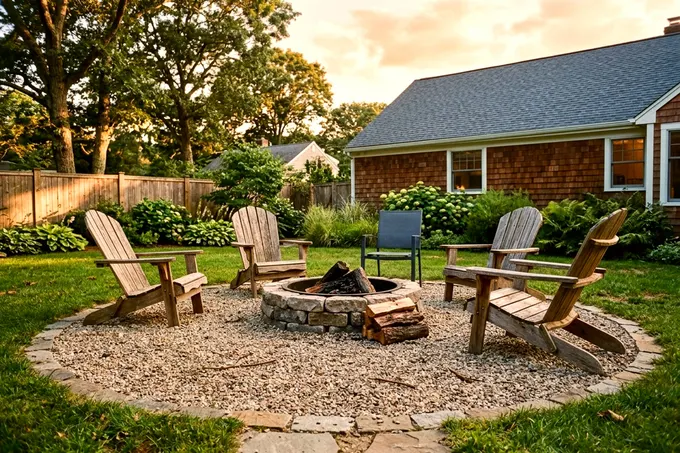
Classic wooden or plastic Adirondack chairs sit flat on the loose stones. A gravel base allows you to adjust the layout easily. You can just push the chairs back on a hot night. Keep a heavy steel ring in the center to contain the logs and ash.
A solid border keeps the loose gravel from spilling into the surrounding grass. You can use steel yard edging, heavy fieldstones, or brick pavers laid side by side. A thick stone border provides a clean edge for the lawnmower to follow.
3. Built in seat wall around the fire
A permanent masonry wall provides guaranteed seating for your guests. You build a curved stone or block wall directly into the patio layout along one side of the pit. This blocks the wind and reflects heat back toward the people sitting down. It removes the need to drag heavy patio furniture across the yard.
Leave plenty of open patio space between the fire pit edge and the seat wall. This gap keeps knees safe from the heat and leaves room to walk past. Build the wall to a comfortable seat height.
You can top the block wall with flat flagstone or smooth poured concrete caps. This flat cap creates a comfortable place to sit. Throw a few weather resistant cushions on top for long evenings outside. The wall also doubles as a convenient spot to set down drinks.
4. Flagstone patio with a gas fire table
Natural flagstone gives your yard an organic look that fits into the garden naturally. Irregular flat stones sit tightly together over a sand base to form a solid floor. Sweep polymeric sand into the joints to lock the stones together and stop weeds. A clean burning gas fire table fits nicely on top of this uneven surface.
Gas fire tables run on a hidden propane tank or a natural gas line, which a licensed pro should run. This setup removes the smoke and ash of a traditional wood fire. You turn a dial to start the flame and shut it off instantly before going inside.
The wide rim of a fire table holds small plates and glasses. The heavy stone surface below handles the weight of the table and wrought iron chairs. A gas table keeps the patio much cleaner because you never have to shovel out wet ash.
5. Fire pit beside an outdoor kitchen
You can separate the cooking zone from the lounging zone. Setting a fire pit patio just beyond the grilling area creates a natural flow for entertaining. Guests can sit by the fire and talk while dinner cooks nearby.
When you plan a DIY outdoor kitchen, place the fire pit downwind from the dining table. This prevents smoke from blowing across your plates. Use the same stone or concrete for both areas to tie the spaces together. A brick fire pit matches a brick grill surround perfectly.
Leave a clear walking path between the two zones. People need space to move freely from the grill to the fire without tripping over chairs. A short paved walkway between the two patios keeps mud off your shoes.
6. Hillside fire pit terrace
A sloped yard needs a retaining wall to carve out a flat gathering space, and your building department can say whether the wall needs a permit. You cut into the hill and build a level terrace supported by heavy concrete blocks. This creates an isolated destination patio separated from the main house. The surrounding hillside naturally blocks harsh winds and makes the space feel private.
Place the fire pit directly in the center of the new terrace. The retaining wall itself can double as extra seating if you build it correctly. Fill the space behind the wall with drainage gravel. Make sure the upper slope has proper drainage so rainwater does not flood your new patio.
Adding wide stone steps makes the climb from the house safe and easy. Put low voltage lights on the stairs to guide people up to the terrace at night.
7. Small corner fire pit for a tight yard
A compact yard still has room for a safe fire if you plan carefully. You can tuck a small square fire pit into a back corner away from the house and wooden fences. Small backyard ideas often rely on clever furniture choices to save space. A low profile fire pit with a flat metal cover acts as a coffee table during the day.
Stick to a simple square concrete pad for the surface. Two narrow loveseats facing each other take up less room than a full circle of chairs. A propane fire bowl is easier to manage in a tight space. Keep any fire bowl at least 10 feet from fences and anything else that can burn.
You just need to verify the exact property line setbacks with your local building department. Pouring a small concrete slab ensures the fire bowl stays perfectly level.
8. Fire pit under string lights
Overhead lighting extends the use of your patio long after the fire burns down. You sink tall wooden posts into concrete footings around the outside edge of the patio. Heavy duty outdoor string lights hang across the space to cast a warm glow. The lights outline the patio and make the area safer to walk through at night.
Keep the light strings high above the fire pit to avoid melting the plastic wires. Hang them high enough so tall guests can walk underneath without ducking. Use pressure treated four by four posts to support the heavy cables.
The thick posts also give you a place to hang outdoor speakers or light blankets. It makes the gathering space feel finished without building a solid roof.
9. Spacing, spark screens and local burn rules
The physical layout must prioritize safety and follow local regulations. Some towns may require a permit to build a permanent fire pit. Your local building department or fire department can explain property line rules and any limits on fuel types or open fires.
Distance is your absolute best defense against accidents. The U.S. Fire Administration advises using fire pits and outdoor fireplaces at least 10 feet away from your home or anything that can burn. That covers anything that can burn, such as overhanging tree branches and wooden sheds, so keep the area around the pit clear.
The U.S. Fire Administration advises using a metal screen over wood burning fires to keep sparks from floating out. A metal dome screen helps catch popping embers before they land on your furniture.
The U.S. Fire Administration advises watching children closely near a fire pit and putting fires out before leaving the yard. Keep a garden hose nearby so you can put the fire out completely before you leave.
How to prepare the ground for a fire pit
The material you lay under the fire pit sets the tone and the budget for the project. Gravel is the cheapest option and goes down fast. It drains well but shifts underfoot and requires heavy raking to stay neat.
Concrete pavers cost more and take heavy lifting to install, but they offer a smooth and stable surface for expensive furniture. Pavers hold up to freezing winter weather and easily sweep clean. Flagstone costs the most and requires careful fitting. It delivers a natural look and holds up for a long time.
Wood and composite decks are not safe surfaces for a wood burning fire pit. Heat from the bottom of a pit can damage composite boards or ignite a wooden deck, so check the pit maker's instructions. Build your fire pit on a stone, concrete, or gravel pad on the ground.
Selecting the right seating layout
You need to match the furniture to the size of your new patio. Heavy wooden chairs take up a lot of space and are hard to move. Light metal chairs slide easily across smooth pavers but sink into loose gravel.
Plan for ample sitting space for every guest. Leave extra empty space behind the chairs. This gives people room to push back from the fire when the logs burn hot. It also provides a clear walking path for someone carrying a tray of drinks.
Built-in benches save space but lock you into one layout. Freestanding chairs give you the flexibility to move things around. Mix a few small side tables into the circle so guests have a place to set their cups.


