
- Wild Style Magazine
- Garden Design
- 14 small backyard ideas that work on a tight lot
14 small backyard ideas that work on a tight lot
Find 14 small backyard ideas that turn a tight lot into a useful outdoor space with smart layout tricks, diagonal paving and space-saving plants.
Words by Sybil Rademaker9 min to read
A small backyard works best when you stop trying to fit everything in. You get a useful outdoor space by picking one clear purpose and using layout tricks that make the boundaries fade. Many little backyard ideas fail because they cram too many features into a few square feet.
1. Give the space one main job
Decide exactly what you want to do outside. Make that single activity the center of the yard. Do not try to fit a dining set, a lounge chair and a lawn into a tiny footprint. The space becomes a crowded obstacle course.
If you eat outside often, buy a heavy wooden table and let it command the space. Put the table right in the middle of the patio and leave plenty of room around the chairs for walking. A clear design plan makes the yard function like an actual room. A divided small yard feels cramped, but a single-purpose space feels deliberate and roomy.
2. Swap the lawn for diagonal paving
A patch of grass in a tight lot often struggles to grow in the heavy shade of fences. It breaks up the ground plane and visually shrinks the yard. Hardscaping the whole area gives you a single unbroken floor. This removes the weekly chore of mowing and watering a tiny square of weak turf.
Lay your concrete or brick pavers on a 45-degree diagonal angle to the house. The longest diagonal lines draw your eye outward to the far corners. This visual trick makes a narrow footprint feel much wider.
Dig a proper gravel base before laying the stones. You can read about installing a flat paver patio to understand the sub-base layers. A perfectly flat surface gives you a steady base for outdoor tables and heavy ceramic pots. The whole yard becomes usable floor space from fence to fence.
3. Grow plants up the fence and walls
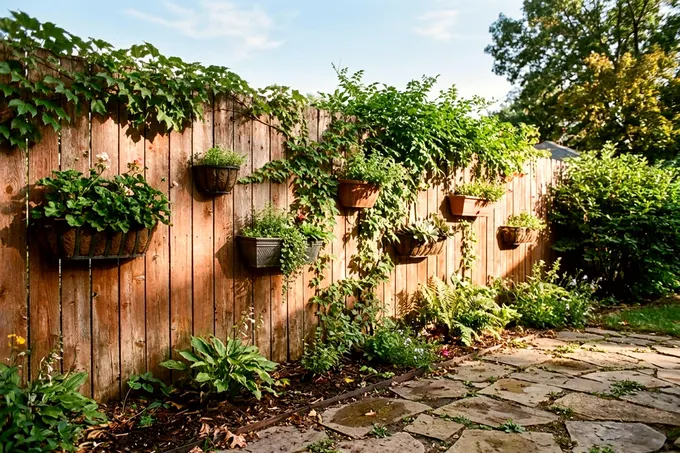
Floor space is tight in a small yard, but the vertical space stands empty. Vines and climbing shrubs pull your attention upward and away from the strict property lines. Train them on wire grids attached to your wooden fences. You get thick green walls without losing a single foot of flat ground space.
Green boundaries absorb summer heat and soften the hard corners of the yard. Pick plants that climb by twining around supports. They do much less damage to painted wood panels than vines with grabbing rootlets.
Fix steel wire standoffs to the fence posts to hold the plant stems. This leaves a small air gap between the leaves and the wood. The air flow helps keep the fence panels from rotting behind the heavy plant growth.
4. Build seating into your retaining walls
Loose patio chairs require a lot of room to push back and walk around. Built-in benches save that wasted space. Attach your seating directly to the front of masonry retaining walls or heavy wooden planters. You push the gathering area right out to the edge of the yard.
Wood bench tops fixed over painted concrete block walls look clean and handle the weather well. Cedar and redwood are common choices for the seat slats because they often resist rot.
Leave the front space under the seat open for air flow and foot room. This built-in approach keeps the center of the patio clear for walking. Your yard holds more guests without adding a single extra piece of loose furniture.
5. Choose one strong focal point
A tight space needs a distinct visual anchor. A fire bowl, a mature specimen shrub or a well-set dining table gives the eye a specific place to land. Multiple small features scatter your attention and make a little backyard feel cluttered. Choose your main element and arrange everything else around it.
Keep the paths clear leading up to that central point. Give the anchor feature plenty of breathing room.
If you use a specimen tree as the anchor, light it from below with a low voltage spotlight. The sharp light draws your attention straight to the feature after dark. This stops the eye from wandering aimlessly into the dark corners of the lot.
6. Stick to a short plant palette
Buying one of every plant at the nursery makes a small yard look messy. Limit your plant choices to three or four main families. Repeat the same ornamental grasses and tough perennials around the entire space.
This strict repetition ties the garden together. It creates a calm atmosphere instead of a chaotic floral display. Pick plants with different leaf textures to keep the limited color scheme interesting. Broad leaves contrast well against fine ornamental grasses.
Mass plantings of a single hardy perennial look much better in a small border than a patchwork of random flowers. Plant in blocks of three or five to build solid blocks of color.
7. Plant small trees with an open canopy
Large shade trees block the light and physically shrink the yard. Choose small varieties like Japanese maple, dogwood or serviceberry. You want an open canopy that lets dappled sunlight filter through to the ground. This keeps the space bright while adding necessary height to the design.
Prune the lower branches as the tree grows. Keeping the trunk entirely bare up to eye level keeps the ground plane clear. You can walk underneath easily or plant shade-loving perennials around the base.
A small tree provides a sense of enclosure without forming a solid dark ceiling over your head. The roots of smaller trees may also be less likely to heave your patio pavers.
8. Lay paths that curve out of sight
A straight walkway shows you the exact limit of the yard immediately. A path that curves out of view behind a tall shrub creates a false sense of depth. The hidden destination suggests the yard keeps going. You do not need an acre of land to make a path bend.
Use crushed gravel or simple stone stepping stones for these secondary routes. A narrow gravel path winding past a dense planting bed draws you in. It forces you to slow down and look at the plants.
Even if the path only leads to a hidden reading bench a short distance away, the sharp curve makes the journey feel longer. This simple trick adds mystery to a lot that you can cross in ten steps.
9. Paint the boundary walls a pale color
Dark fences absorb sunlight and make a small space feel like a closed box. Paint your wooden fences or stucco block walls a soft white or very pale gray. The bright surface reflects natural light back into the shady corners of the yard.
Pale boundaries blur the hard edges of the property line. When the walls reflect the bright sky, the exact perimeter becomes much harder to judge. A light background also makes the green leaves and bright flowers of your borders stand out sharply.
Use a proper exterior masonry paint for block walls and a solid color stain for wood. You get a brighter space that feels far wider than the property lines actually say it is.
10. Hang outdoor mirrors to fake an extra zone
A large mirror fixed to a solid wall tricks the eye into seeing another garden room. Position the mirror so it reflects tall plants rather than the back of your house or a plain fence. You want the reflection to show deep foliage.
Use a mirror made for outdoor use, and look for a shatter resistant type that is safe if a stray ball hits it.
Tuck the edges of the mirror behind climbing plants or wooden trellis slats. Hiding the frame makes the illusion of an open doorway into another garden much stronger. Angle the top of the mirror slightly downward to reflect the ground.
11. Run a small water bowl for steady sound
A small backyard catches every noise from the neighbors and the busy street. A bubbling water bowl masks that harsh background sound. You do not need a large pond or a massive rock waterfall. A simple stone basin with a small recirculating pump sits quietly in a corner.
The steady splash pulls your focus inward. It makes the yard feel highly private and completely enclosed. Keep the pump running on a standard plug timer.
Run the pump from a protected outdoor outlet, and ask a licensed electrician to add one if you do not have one. Birds will quickly learn to use the moving water to drink and wash.
12. Build raised beds for deep roots and clean edges
Raised beds give you complete control over the soil quality in a tight lot. You can read up on building durable raised garden beds to get the timber corners right. They provide straight clean lines and deep rooting space for plants in places where the native ground soil is terrible.
The raised height brings the plants closer to eye level. This adds vertical interest to a completely flat yard. You can build them from thick cedar planks or heavy concrete blocks.
Capping the retaining walls with wide flat stones gives you a place to sit while you pull weeds.
13. Hide your storage under the deck or benches
Clutter kills small spaces very fast. Push brooms, bags of potting soil and empty plastic pots ruin a clean layout. Put your dead space to work to keep the yard tidy.
Build heavy hinged lids into your wooden patio benches. Leave an access door under a raised deck for bulky items like lawn mowers and folding chairs. Line the inside of wooden storage boxes with waterproof plastic to keep the cushions dry.
Keeping the floor entirely clear of tools gives you back the square footage you actually want to use. A clean ground plane makes the whole lot feel significantly larger.
14. Grow container vegetables in the sunniest spots
Pots let you chase the light in a heavily shaded yard. You can move them around the patio as the sun shifts across the lot during the day. Fruiting vegetables need very specific conditions to grow well in a small space.
Fruiting vegetables in containers need at least five hours of full, direct sun a day and do better with about 8 to 10 hours. Soil straight from the garden usually cannot be used in a container because it may be too heavy. Buy a lightweight potting mix instead.
Use this table to check your basic container setup against the facts from the Clemson Extension.
Container rule | Measurement or requirement |
|---|---|
Minimum container depth | At least 6 to 8 inches deep |
Drainage requirement | Drainage holes in the bottom |
Watering frequency | May need watering daily or even twice a day |
Pots can dry out fast on hot, windy days. Check them at least once a day and twice on hot, dry or windy days.
Checking the rules before you break ground
Before you dig holes for a new fence or lay a heavy patio base, you have to check what lies under the grass. Every digging project, regardless of depth, requires contacting 811 a few days in advance. The free service gets utilities to mark the approximate location of buried lines with paint or flags, so you do not hit a water pipe while digging footings for a bench.
You also need to know the rules for any structures you want to build. The International Residential Code is a model code that the International Code Council says is in use or adopted in 49 states, the District of Columbia, Guam, Puerto Rico and the U.S. Virgin Islands.
Your local building department sets the specific permit rules for decks, retaining walls and patio paving, often starting from this model code. Always check with the local permit office before you order a single load of materials.


