- Wild Style Magazine
- Roofing
- Metal roof or asphalt shingles for your house
Metal roof or asphalt shingles for your house
Compare a metal roof with asphalt shingles for your house to see which fits your budget, and learn how they stack up on lifespan, cooling costs and local rules.
Words by Reuben Stillwagon7 min to read
Asphalt shingles make the most sense for typical budgets because the upfront price is much lower. A metal roof is the better investment if you plan to stay in your home for decades and can afford the higher initial cost. Your choice comes down to cash on hand versus total lifespan.
Upfront cost and long-term cost
Paying for a roof replacement hurts. Asphalt shingles keep that financial pain to a minimum. The Metal Roofing Alliance says a metal roof costs roughly two to three times what an asphalt shingle roof costs.
That steep price tag buys a roof that can last decades longer. You pay more on day one, but the cost spreads out over a much longer timeline.
Labor is part of the bill. Metal panels call for installers experienced with metal and careful alignment, while most local crews are familiar with shingles.
You can sometimes save money on a metal installation by leaving the old roof in place. The Metal Roofing Alliance says metal roofs can often be installed over an existing roof, though a roofer has to confirm yours qualifies. This skips the heavy tear-off labor and the expensive dumpster fees.
You still need to check your local codes before you skip the tear-off. ARMA notes that some local ordinances forbid reroofing over two or more layers of shingles. Ask a roofer to confirm your deck and framing can carry the new roof. Your local building department will tell you how many layers you can legally keep on your house.
The Metal Roofing Alliance, an industry group, says a metal roof adds to the resale value of your home. Ask a local agent or appraiser how much it counts in your area. You will still spend less cash out of pocket on an asphalt roof.
How long each one lasts and what fails first
A standard asphalt roof does a great job for a reasonable time. The Metal Roofing Alliance puts the average life of an asphalt roof at 12 to 20 years. Sun exposure dries out the asphalt materials.
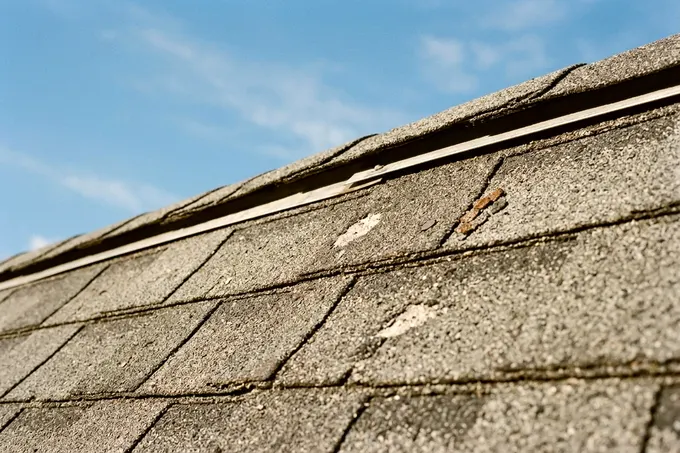
The protective gravel granules wash away into your gutters. The edges start to curl, and the shingles eventually crack. You will know it is time to replace them when you see bare spots and lifted corners.
Metal outlasts asphalt by decades. The Metal Roofing Alliance says a metal roof can be counted on to last 30 to 50 years or more and can often be repainted rather than replaced. The steel or aluminum panels do not dry out the way asphalt does.
The factory paint coating is usually the first thing to show age. Fading paint looks dull, but the metal underneath usually keeps the house dry. A fresh coat of paint can restore the look, since the Metal Roofing Alliance says metal roofs can often be repainted rather than replaced.
Roof material | Average lifespan | Upfront cost comparison |
|---|---|---|
Asphalt shingles | 12 to 20 years | Base cost |
Metal roof | 30 to 50 years or more | Roughly two to three times more |
Knowing which roof shingles fit your house helps you weigh these lifespans against your budget. Thicker shingles may last somewhat longer than basic ones, but ask your roofer for the warranty on the product you pick.
Wind, hail, snow and fire
Extreme weather tests any roof across the different climates in the United States. Wind tries to get under the edges and lift the material. Asphalt shingles rely on a strip of factory adhesive to stay down.
High winds from coastal storms or summer thunderstorms can break that seal and tear shingles right off the deck. Metal panels interlock or overlap securely. They fasten directly to the roof deck. Many metal products and many shingles carry wind ratings, so compare the labeled rating on each.
Hail damages both materials differently. Large hailstones can crack asphalt shingles and knock off their granules. This exposes the raw layer underneath to water and sun.
Hail can dent the flat planes of a metal roof. You might end up with a waterproof roof that looks like a golf ball. Ask your insurer how its policy treats dents on a metal roof compared with cracked shingles before you choose.
Snow tends to slide off a metal roof, and the Metal Roofing Alliance says it sheds snow fast. The smooth surface gives ice and snow little to grip.
Ask your roofer whether you need snow guards, which are brackets that slow sheets of ice sliding off near doors, walkways and gutters. Snow tends to stay put longer on shingles.
The Metal Roofing Alliance says a metal roof can help protect a home when burning embers land on it.
Fire ratings vary by product, so ask your roofer for the rating printed on the shingles or panels you are considering and ask your building department about local fire rules.
Heat, reflectance and cooling bills
Your roof absorbs a lot of summer sun. A standard dark asphalt roof soaks up that heat and passes it down into your attic. Your air conditioner has to work harder to keep the house comfortable.
Many metal roofs have reflective finishes. The Metal Roofing Alliance says these finishes can send back much of the solar heat they absorb.
You do not have to buy metal to get these energy savings. Manufacturers make shingles with special reflective granules. The Department of Energy says cool asphalt shingles cost about the same as conventional asphalt shingles. You may be able to cut cooling costs without raising your materials budget.
The savings show up on your monthly power bill. The Department of Energy says a cool color roof on a home can shave at least 5% to 20% from cooling costs, with the greatest savings in hot and warm climates. Lighter colors perform best. A white or light gray roof reflects more heat than a dark brown or black one, no matter which material you choose.
Looks, profiles and neighborhood rules
Asphalt shingles look natural on almost any house style. They dominate American suburbs for a reason. The textured, overlapping look fits colonial homes, ranches and modern builds alike.
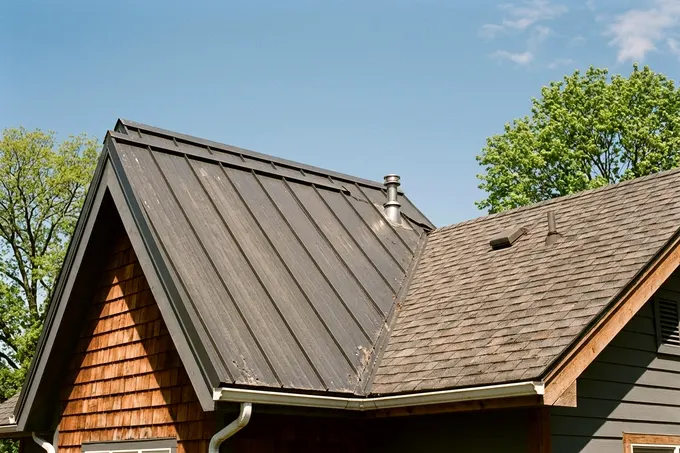
You can choose from dozens of colors to match your brick or siding. Dark browns, slate grays and deep greens blend easily into a tree-lined street.
Metal roofs bring a distinct, bold look. Standing seam panels have raised vertical lines that look great on farmhouses and modern cabins. Some homeowners find the long commercial lines too harsh for a traditional subdivision.
Manufacturers also make stamped metal panels. These mimic the look of wood shakes, slate tiles or traditional shingles. They can cost more than flat metal panels and may blend in better on older homes.
Check with your homeowners association before you make a choice. Some associations set rules on roofing materials, and a few may limit metal panels.
Read the bylaws and apply for approval before you hand a contractor a deposit. Your local building department also dictates what you can install. They manage the permits and enforce the fire codes for your specific neighborhood.
Noise, repairs and what roofers check before quoting
People often worry that a metal roof will sound like a snare drum during a storm. This is largely a myth on residential homes. The Metal Roofing Alliance says there is little difference between metal and other roofing materials in noise from rain or hail.
Attic insulation and the roof deck also help dampen sound before it reaches your living room. A bare metal porch awning can still sound louder in a downpour.
Repairing a damaged roof depends heavily on the material. Roofers can easily slide out a torn asphalt shingle, pull the nails and secure a new one. A patch job blends in fast.
Metal panels run all the way from the roof ridge down to the gutter. If a falling oak branch damages one section, the roofer may have to replace the entire long panel. Color matching an old painted metal panel with a brand new one can be difficult.
Knowing what happens during a roof replacement helps you prepare for the contractor's visit. A good roofer will climb into your attic before writing a bid. They look for water stains, sagging rafters and black mold.
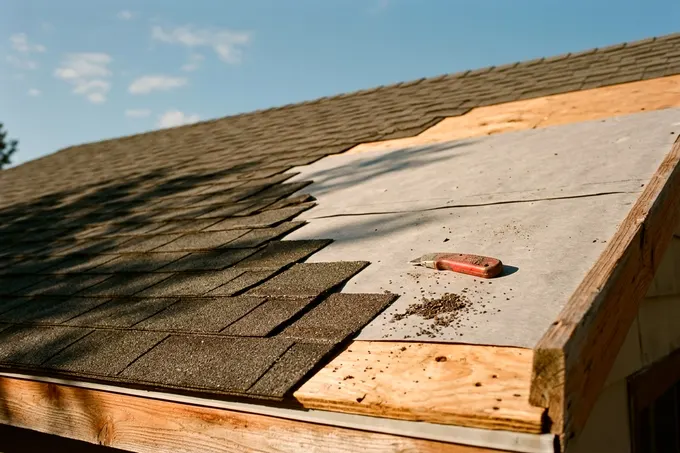
A new metal roof over the old one or an extra layer of shingles needs a sound deck and framing. If the deck is rotting, the crew has to tear off the old roof and replace the wood sheets.
Ask three local contractors for quotes. Have them break out the costs for materials, labor, underlayment and dumpster fees. Compare the warranties on both the factory products and the local workmanship.
A long material warranty means nothing if the installation fails in year two. Pick a crew with a solid track record in your specific local climate. Your town building department may require a permit for the job, so ask before work starts and let the crew handle any inspection.