- Wild Style Magazine
- Patios and Pergolas
- 13 pergola ideas for shade over a patio or deck
13 pergola ideas for shade over a patio or deck
These 13 pergola ideas show you how to add shade to your patio or deck with freestanding, attached, louvered and wood options for your yard.
Words by Rory Sundquist8 min to read
A pergola filters direct sunlight and defines a living space without completely closing off the sky above. You can build a freestanding structure out in the yard, or attach a frame to your house or deck. These 13 pergola ideas help you match the frame and cover to the shade you actually need.
1. Freestanding pergolas for a separate patio
A freestanding pergola stands on posts and does not touch your house. This gives you the freedom to position your shade anywhere in the yard. You can build one over a fire pit or use it to shade a flat paver patio far from the back door.
Since it stands alone, the frame needs bracing and footings to resist wind. Your building department can tell you what your town requires for post size and footings.
A large footprint offers enough room for a dining table and six chairs. The open sides let you step right onto the grass when you want to walk the yard.
2. Attached pergolas over a back door
An attached pergola connects directly to your house on one side and rests on posts on the other. This can cut the number of footings you have to dig. It creates a covered transition right outside your kitchen or living room.
The wall connection is a structural detail that also has to keep water out of the wall, so have it designed and flashed correctly and ask your building department what it requires. The roof slope of your house dictates how high you can mount the ledger before hitting the eaves.
You must check the location of your second-story windows before you design the roof height. A tall frame might block the view from a bedroom or interfere with a window box. You can use wood or metal for an attached frame.
3. A pergola on an existing deck
Building a pergola on top of a deck gives you instant shade where you already have furniture set up. You cannot just screw heavy pergola posts directly to the surface deck boards. The extra weight and wind load have to reach the ground through the framing and footings, so a pro needs to check the design.
The American Wood Council says its DCA 6 deck guide applies only to single level residential decks attached to the house, not to canopies or awnings. Ask a licensed engineer or your building department whether your existing deck framing and footings can take the new loads.
If your deck footings cannot take the load, an engineer or contractor may call for new ones, and your building department can say what is needed.
4. Louvered roofs for total sun control
Standard spaced rafters only block a fraction of the midday sun. A louvered roof fixes this with wide, adjustable slats that pivot open and closed. You can tilt the louvers to catch the morning breeze or shut them tight to block the afternoon glare completely.
Some louver systems are made to channel rain away when closed, so check the maker's specifications. Some manual systems use a hand crank. Motorized versions need electrical wiring, which is a job for a licensed electrician.
Check the maker's instructions for snow and wind, because snow load can damage the roof or overload the frame.
5. Fabric canopies that slide open
A retractable fabric canopy runs on wire cables or aluminum tracks stretched between the pergola beams. You pull the fabric across the top to create dense shade during the hottest part of the day. You can slide it back to watch the stars at night.
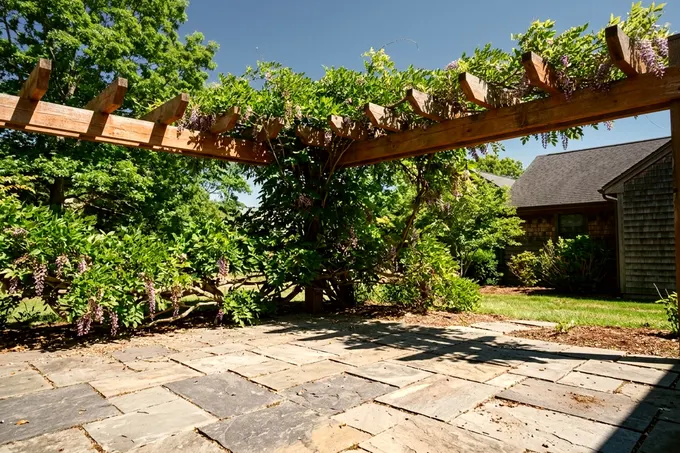
The fabric hangs in gentle folds that soften the rigid lines of a wood or metal frame. Check the fabric maker's care instructions for cleaning. Follow the maker's guidance on pulling the canopy back in wind and storms.
A canopy gives you shade without blocking the breeze.
6. Shade cloth stretched tight
A fixed shade cloth offers a simple way to increase the sun protection of an open wood frame. You stretch a woven polymer fabric tightly over the top rafters and secure it with heavy grommets and screws. Shade cloth blocks a share of the sun, and the weave density sets how much.
The open weave can let some hot air escape. A denser cloth gives more shade, and an open weave lets more air and light through.
Darker cloths tend to absorb more heat, while lighter colors tend to reflect more of the sun. Check the maker's advice on removing the cloth before snow, since a snow load can damage the fabric and frame.
7. Climbing vines on wire supports
Vines create a thick canopy of living green shade across the top of a pergola. You can string heavy stainless steel wire between the rafters to give plants a place to grab hold. Ask a local nursery which climbing plants suit your climate and your frame.
Deciduous vines drop their leaves in fall, which lets more sun through in colder months. Trim the vines regularly, since a mature vine adds weight and wind load to the frame.
You need to plant the vines in large containers or directly in the ground near the base of the posts. Regular watering during the first summer helps the roots establish quickly.
8. Cedar frames that resist rot naturally
Cedar is a traditional choice for a backyard pergola, and the wood has some natural resistance to rot and insects. The rough texture takes solid stain well and blends into a garden setting. A cedar frame asks for regular upkeep to maintain its strength and appearance over the decades.
Check the finish maker's instructions for how often to wash the wood and reapply stain or water repellent. Without a finish, cedar weathers to silver. Use fasteners rated for outdoor use with cedar and check the label.
Cedar smells crisp and clean when you cut it. Wear a dust mask when using a saw or sander.
9. Steel and aluminum for modern yards
Metal pergolas use hollow aluminum or steel posts to create wide overhead spans, and the maker's specifications set the limits. Aluminum does not rust, though check the maker's guidance for yards near salt water. Steel weighs more, and any frame in a snow area needs to meet your local snow load rules.
Many metal frames have a powder-coated finish, so check the maker's care instructions. Many kits bolt together with concealed brackets.
Anchoring depends on the maker's instructions and on what is under the pergola, so ask a pro before drilling into an existing slab or footing.
10. A corner pergola for a small yard
A corner pergola can use three main posts and a triangular top to fit neatly into the tight angles of a property line. This shape adds overhead interest without dominating a small space. It keeps the center of your lawn open for games and foot traffic.
You can set a curved wooden bench underneath or place a small fire pit in front of the posts. This footprint works well for creating a private reading corner away from the main house. Cutting the rafters requires precise angle measurements to match the yard boundaries perfectly.
A custom fabric shade cut to match the triangle shape gives you solid cover without a heavy roof. Ask the maker how to attach it at the three corners.
11. A pergola over an outdoor kitchen
Putting a pergola over an outdoor grill gives the cook a comfortable place to stand during summer parties. Check the grill maker's manual for clearances to overhead structures, and ask your building department about local rules, since trapped heat and smoke are a fire hazard.
The overhead structure gives you a stable place to mount task lighting right above the countertops. If you build an outdoor kitchen on a deck, ask the grill maker and your building department what overhead materials and clearances they allow.
Follow the grill maker's clearance rules for posts and any overhead cover.
12. Privacy screens to block the neighbors
You can close off one or two sides of a pergola by adding horizontal wood slats between the posts. A slatted wall stops neighbors from looking straight into your seating area while still letting a breeze pass through. You can use aluminum privacy panels cut with geometric patterns for a modern look.
You can also hang outdoor curtains on weather-resistant rods to soften the rigid corners. Curtains tie back quickly when you want a clear view of the yard. Check the fabric maker's advice on storing it before winter storms.
13. Integrated lights and ceiling fans
Adding electrical power to your pergola turns it into a useful space long after the sun goes down. A ceiling fan rated for outdoor use can add a breeze, but the beam has to be designed to carry it, so ask a pro. String lights woven through the upper rafters cast a warm glow over a dining table.
You will need outdoor-rated electrical equipment and wiring done by a licensed electrician to local code. The electrician will decide how to route and protect the wiring.
You can mount the light switches right on the pergola post or install a remote system. Placing the switches near the house door makes it easier to turn off the yard lights before bed.
Plan the footings, permit and 811 request
Any heavy overhead structure requires strict attention to the rules in your town. The International Residential Code is a model code that the International Code Council says is in use or adopted in 49 states, the District of Columbia, Guam, Puerto Rico and the U.S. Virgin Islands. Many local building departments enforce a version of this code, and many require a permit for a pergola, so ask yours.
You may need to submit a site plan showing setbacks from your property lines. Footing size and depth are set locally, often by the frost line, so ask your building department what applies.
Digging those deep footings means disturbing the soil where utility lines live. 811 says every digging project, regardless of depth, requires contacting 811 a few days in advance. The utility locators will mark the buried lines in your yard so you know where not to dig.