- Wild Style Magazine
- Patios and Pergolas
- Flagstone patios explained from stone type to base layers
Flagstone patios explained from stone type to base layers
A flagstone patio gives your yard a natural stone surface for outdoor living, so learn how to choose the right rock and build a base that lasts.
Words by Rory Sundquist10 min to read
A flagstone patio gives you a solid outdoor floor made of real stone. The heavy flat rocks rest on a packed base to create a surface for tables and chairs. You choose the rock type and decide whether to set the pieces in sand or lock them down with mortar.
Common types of flagstone and how they look
Flagstone is a category of flat paving rock rather than a single specific geological material. Quarries pull the rock from the earth and split it along natural seams. This gives you a flat surface for walking. You will find several common types of stone at the supply yard.
Sandstone is a popular choice for yards, bringing warm earth tones like tan, brown and soft red to the space. The gritty surface can give a good grip when wet and often stays cooler under bare feet than darker rocks. Sandstone is widely sold for residential patios. Ask your supplier whether matching stone will be available if you expand the patio later.
Slate brings deep rich tones to your outdoor space, with dark gray, blue, green and even rustic reds. The smooth surface splits into thin layers that look sharp but can flake off over time, and the dense rock easily sheds water in wet climates. Dark slate absorbs heat from the sun to get very hot on summer afternoons. These dark colors show dust quickly, so you will need to sweep it often.
Limestone offers a lighter palette in soft gray, white and pale beige that reflects the sun to keep the patio cool. It has a fine grain, and it can wear smooth with foot traffic, so ask your supplier how it handles freezing weather where you live. Limestone feels soft to the touch compared to other rocks. You often find small fossil imprints on the surface of the stone, which adds character to your outdoor room.
Bluestone is a dense sandstone from the Northeast that comes in a classic slate blue, sometimes mixed with brown or green. This hard, heavy rock is commonly used in cold climates and holds up well to patio furniture. Bluestone is also seen around swimming pools, but ask your supplier about the finish before you count on it for grip.
Quartzite gives you a sparkling surface because the rock contains tiny crystals that catch the sunlight. You find quartzite in silver, bright white and gold tones. The stone is hard and wears well under foot traffic. Rain can make it slippery unless the surface has a rough finish.
Granite is very durable in speckled gray, black and pink. The stone is incredibly dense and very heavy to move. Granite pieces often come with a flamed surface. The quarry hits the stone with high heat to pop the crystals and create a gritty texture for safe walking.
Choosing irregular flagstone or square cut stones
You have a choice in the shape of your flagstones. The shape changes how the patio looks and how hard you have to work to put it together.
Irregular flagstone comes in random shapes straight from the quarry. The pieces look like broken puzzle pieces. You get rough edges and varied sizes. A patio made with irregular stone has a rustic and natural feel.
Laying this kind of stone takes patience. You have to sort through the pile to find pieces that fit near each other. You leave wide joints between the stones because the edges do not line up perfectly. This style works well for casual garden paths and relaxed backyard spaces.
Square cut flagstone goes through a saw at the quarry. The blades cut the rough rock into crisp squares and rectangles. This style gives you a formal look. The straight edges mean you can lay the stones in tight straight lines.
You can arrange them in a repeating pattern or a random layout with straight joints. Square cut stone installs faster than irregular stone because you do not have to piece together a jigsaw puzzle. The tight joints leave less room for weeds to grow. Cut stone often costs more because of the saw work.
Tumbled flagstone offers a middle ground. The quarry cuts the stone into squares and runs the pieces through a tumbling machine to knock the sharp corners off the blocks. You get the easy layout of a square cut stone with the soft worn edges of an old cobblestone. Tumbled stones often cost more because of the extra processing.
Choosing between cuts changes your waste material. Irregular stone requires lots of chipping and shaping to make pieces fit, leaving you with a pile of scrap stone you can use for small retaining walls or garden edging. Square cut stone produces very little waste because the straight pieces butt right up against each other. You only cut the stones at the outer edges of the patio.
Setting stone on dry sand or wet mortar
You can build your patio using two different methods. The stone goes over a flexible sand base or a rigid concrete base.
The dry laid method relies on gravity and friction. You place the flagstones on a bed of loose sand. The sand gives you a soft material to level each stone. You tap the rocks down until the tops sit flush with each other.
A dry laid patio flexes when the ground freezes and thaws, so the stones might shift slightly over the seasons. You can easily lift a settled stone, add more sand and set it back in place, making this method forgiving for a weekend homeowner project. If you prefer manufactured blocks over natural stone, a flat paver patio needs similar base preparation.
A dry laid patio generally calls for thicker stone, because the pieces rely on their own weight to stay in place. Thin stones can crack if the base shifts. Ask your supplier what thickness suits dry laying.
The mortar method locks the stones in place permanently over a poured concrete slab. You spread wet mortar over the cured concrete, set the stones into the mix, and then pipe mortar into the joints between the rocks. A mortared patio gives you a rigid floor that feels just like an indoor room. The stones are much less likely to rock or sink.
This method takes more skill and a lot more work. You have to mix concrete, pour the slab, wait for it to cure and then mix mortar for the stones. If the ground shifts, a mortared patio can crack. In freezing climates you may need a deeper base, so ask a local pro how deep to dig.
Mortared patios can often use thinner stone because the concrete slab carries the load. The rigid base means you must plan for water drainage carefully, sloping the whole slab toward the yard since water cannot seep through the mortar. You must also check with your local building department. Concrete work may require a permit and an inspection.
Building a solid base for your patio
The foundation under the stone does all the hard work. A poor base lets the stones sink into the mud. A good base drains water away and supports heavy loads.
You start by digging out the dirt and entirely removing the topsoil, which holds water and acts like a sponge. You dig down until you reach firm subsoil. You also need to slope the bottom of the trench away from your house. This grade ensures rain water runs off the patio and into the yard.
Digging the base takes serious effort, but a flat shovel helps you scrape the bottom of the hole smooth. You can check the slope with a long straight board and a level. If you dig too deep in one spot, do not throw the soft dirt back in. Fill the low spot with gravel so the base stays hard.
You line the bottom of the excavation with a heavy filter fabric to stop the soil from mixing with your gravel. You then haul in crushed gravel. The gravel needs jagged edges so the pieces lock together. Rounded river rock is a poor choice because it can shift under pressure.
You spread the gravel in layers and run a heavy plate compactor over each layer to vibrate the gravel into a hard mass. Renting a heavy machine makes compaction much easier. A gas powered plate compactor pounds the gravel much harder than a hand tamper. You just walk the machine back and forth across the base.
The gravel locks together and stops shifting under your boots.
The final base layer is coarse concrete sand spread over the hard gravel to give you a soft bed to press the flagstones into. Avoid fine play sand, which can trap moisture and wash away. You drag a straight board across the coarse sand to make it perfectly smooth. Follow your supplier's guidance on when to compact the sand.
Filling the patio joints with sand, gravel or plants
The gaps between the flagstones need a filler material. The joints keep the stones from sliding around and finish the look of the patio.
Polymeric sand is a common choice for tight joints, made from a mix of fine sand and binding agents. You sweep the dry sand into the gaps, brush the stone surfaces clean, and mist the patio with a hose to activate the binders. The sand hardens into a firm joint that can resist washing out in the rain and slow weeds. Follow the product label for the conditions it needs to set.
Stone dust gives you another dry joint option. The heavy gray powder packs down harder than regular sand. You sweep the dust into the joints and wet it down to create a firm joint that matches dark flagstone while allowing water to seep through. You will need to top off the stone dust from time to time as rain erodes the surface.
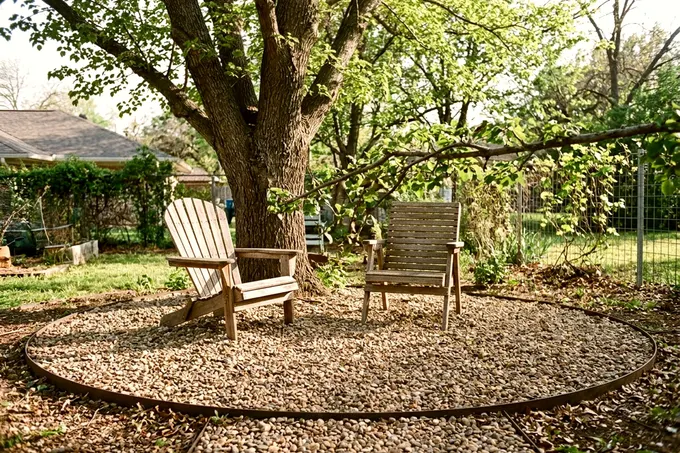
Small gravel works well for wide joints between irregular stones, using either fine crushed rock or smooth pea gravel. The loose stones let rain drain straight through the patio and into the earth below. Loose gravel will scatter over time, so you have to sweep stray pieces back into the joints. If you use fine loose stones, a pea gravel surface needs care to stay contained.
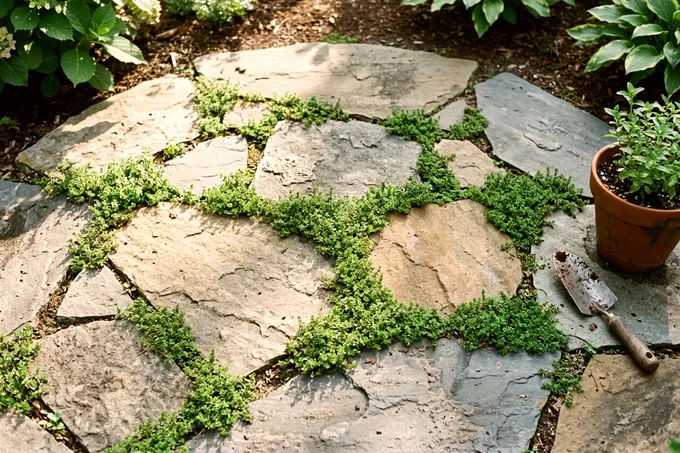
You can also use living plants like creeping thyme and tough moss to fill the gaps. You fill the joints with good soil instead of sand, plant small plugs of greenery and water them well. The plants spread out to form a soft green outline around each rock, adding an organic look that fits perfectly into a garden setting. Living joints just take regular watering and weeding to stay healthy.
Weeds will try to grow in any dry material. Seeds blow in from the yard and sprout in the sand or gravel. You can pull the weeds by hand or pour boiling water on them. Boiling water can kill small weeds without chemicals, but carry it carefully to avoid burns.
Maintaining a flagstone patio each year
A flagstone patio asks for very little maintenance compared to a wood deck. The solid rock withstands heavy rain and baking sun without rotting.
You need to sweep the patio regularly to keep dirt off the stone, because dirt left in the corners will turn into mud and stain the rock. You can wash the patio with a garden hose and a stiff broom. A mild dish soap helps lift stubborn stains from dropped food or bird droppings. You should avoid harsh chemical cleaners that can etch the surface of limestone or slate.
You can apply a clear masonry sealer to the clean flagstone to soak into the rock and block stains. Sealer can help keep grill grease from staining light colored sandstone. You apply the liquid with a simple paint roller on a dry afternoon. The coating wears off over time and needs a fresh coat, so check the label.
The joints need attention after a harsh winter because frost and heavy rain can wash loose sand out of the gaps. You should inspect the joints each spring to pour fresh sand or gravel into the low spots and sweep it flush. If you used polymeric sand, you might find small cracks in the hardened joints. You can simply scrape out the loose bits and sweep in new material.
You might notice a stone settling lower than its neighbors over time, creating a tripping hazard that holds puddles of water. You can fix this by prying the stone up with a heavy bar. You add a scoop of coarse sand to the base, smooth it out and drop the rock back down. A few taps with a rubber mallet will settle the stone flush with the rest of the patio.
Snow removal requires a gentle touch, so you should use a plastic shovel to clear the patio. Metal shovels can scratch softer rocks like limestone. Check with your supplier before using rock salt, because salt can damage some natural stone and cause flaking. Plain sand gives you grip on the ice without damaging your patio.