- Wild Style Magazine
- Patios and Pergolas
- Is a stamped concrete patio worth it
Is a stamped concrete patio worth it
Decide if a stamped concrete patio makes sense for your yard by comparing cracking, upkeep, slip resistance and sealing with regular pavers.
Words by Rory Sundquist6 min to read
A stamped concrete patio is worth the investment if you want the look of stone or brick without the weeds pulling through the joints. Get quotes for stamped concrete and pavers to compare cost and install time. The tradeoff is that concrete tends to crack, and you will need to reseal the surface on the sealer maker's schedule to protect the color.
How contractors make a stamped concrete patio
Before any concrete arrives, a crew marks out the patio shape and digs down into the soil. They build wooden forms to hold the wet cement in place. The American Cement Association says the subgrade under concrete paving must be graded and compacted. This dirt work helps support the finished slab.
Once the gravel base is packed tight, the crew pours the wet concrete inside the forms. They smooth the surface with a wide tool called a bull float. Next comes the color. Many contractors order concrete with the base color mixed right in at the plant, while others throw a colored powder across the wet slab and work it in with trowels.
The crew then spreads a fine, colored release powder over the patio to stop the heavy rubber stamps from sticking to the wet concrete. They lay the textured mats down and press them into the surface, working quickly before the slab dries. The stamping process requires multiple people stepping carefully across the mats. Later, they wash the excess release powder away, cut the joints and apply a clear sealer to protect the finish.
Stamped concrete compared to pavers
Both stamped concrete and individual paving stones give your yard a custom, textured look and require a solid gravel base. Stamped concrete forms one continuous surface, so it has fewer open joints than pavers for weeds to root in. Pavers can settle if the base is poorly built.
Pavers are usually easier to repair. If a tree root lifts a section of an installed paver patio, a crew can often pull up the affected pavers, fix the base and set the same pieces back down. The repair is often hard to see.
A cracked or heaved slab of stamped concrete is usually harder to repair. A patch can show because matching the color and pattern is difficult. For serious damage, ask a contractor whether a section can be replaced or the slab has to come out.
Handling cracks and control joints
All concrete shrinks as it cures and expands as the weather warms up. This movement can lead to cracks. The goal is to guide cracking into the joints rather than across the surface.
The American Cement Association says joints are created in concrete paving, typically by sawing, to control cracking. A contractor cuts these narrow grooves into the slab to create intentional weak points in the concrete. When joints are properly designed, the cracks tend to form below them, out of sight.
Control joints will interrupt your stamped pattern. A good contractor will plan the cuts to run alongside the grout lines of the stamp, but the straight saw lines will still be visible. You have to decide if a few straight cuts will bother you more than wandering, natural cracks. Hairline cracks can still appear over time, so ask the contractor what they consider normal and what the warranty covers.
Choices for color, pattern and slip resistance
Stamped concrete offers many combinations of color and texture to match your house. The base color covers the whole slab, while the release powder leaves a second, darker color behind in the low spots of the stamp. This two-tone effect gives the fake stone realistic shadows and depth.
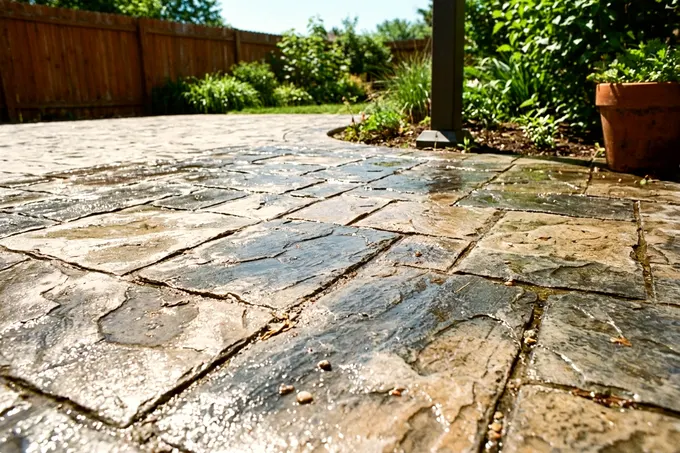
You can choose stamps that mimic rough slate, smooth flagstone, cobblestone or weathered wood planks. Deep textures look more authentic. Deep grooves can also trap dirt, hold puddles after rain and make sliding patio chairs harder. A shallower slate texture creates a smoother surface for your patio furniture.
Slip resistance requires special attention. Some sealed stamped surfaces can be slippery when wet. If you build the patio near a pool, ask the contractor about slip resistance for wet feet.
Ask the crew about an anti-slip additive for the sealer and what the sealer maker recommends for wet areas. An additive can add traction, but ask to see a sample finish wet before you commit.
The reality of sealing and resealing
A stamped concrete patio requires steady upkeep to stay looking right. Colors can fade in direct sun, and sealer wears away from foot traffic and weather.
Plan to wash and reseal the patio on the schedule the contractor and the sealer maker give. Follow the sealer maker's instructions for cleaning, drying and applying each new coat.
Skipping it can leave the surface more exposed. In cold climates, water that soaks in and freezes can damage the surface.
A sealer can also help guard against stains. If you plan to build a DIY outdoor kitchen on the slab, ask the contractor about slab thickness and sealer first. If the old sealer turns cloudy or white, ask the contractor or sealer maker how to fix it before you apply a new coat.
What to ask your concrete contractor
Stamping leaves no room for mistakes because the concrete hardens quickly. Ask your contractor exactly how they plan to prep, pour and finish the job.
The American Cement Association says the longer concrete is kept moist while curing, the stronger and more durable it becomes. The American Cement Association advises starting to cure concrete once its exposed surfaces have hardened enough to resist marring. Ask the contractor if they use a liquid curing compound or another method to hold the moisture in.
Get clear answers on the physical details before you sign a contract.
- How thick the poured slab will be from edge to edge
- What type of steel rebar or wire mesh goes inside the concrete
- How the dirt subgrade will be graded and compacted before the pour
- When the control joints will be cut and where they will run
- What specific anti-slip additive is mixed into the liquid sealer
- How many days you must wait before walking on the finished patio
Tell the contractor how you plan to use the patio, including whether any vehicle will ever drive over it, since that changes the slab design. Check with your local building department to see if your patio size requires a permit before digging begins.
When plain broom finish concrete is the better buy
Stamped concrete usually costs more than plain concrete because of the extra labor to color, stamp and detail the wet cement. A plain broom finish slab can serve the same purpose for less money.
A broom finish gets its texture from a stiff brush pulled across the wet surface. The tiny ridges can give better traction when wet than a smooth sealed surface. Plain concrete may need less upkeep because there is no two-tone surface color to protect. Ask the contractor whether to seal it.
Plain concrete looks simple and clean and can suit modern homes and letting your garden beds and landscaping stand out. If you want to spend your budget on a pergola for shade over your patio or high-end outdoor furniture, a plain slab makes financial sense. You get a hard, flat surface for entertaining without the strict maintenance schedule of a stamped pattern. You can also ask the contractor about adding a base color to a broom finish slab.