- Wild Style Magazine
- Garden Design
- 7 vertical garden ideas for walls, fences and small yards
7 vertical garden ideas for walls, fences and small yards
A vertical garden gets your plants off the ground and frees up floor space. Seven ways to build one on a fence, wall or freestanding frame.
Words by Sybil Rademaker7 min to read
A vertical garden gets your plants off the ground and frees up floor space in a small yard. Growing upward on a fence, solid wall or freestanding frame leaves you more room for seating and walking. Bringing the soil up to eye level makes pruning and harvesting easier so you spend less time bending over.
1. Pocket planters on a sunny fence
Fabric pocket planters hang directly on a wood fence and hold soil in separate pouches. The felt material breathes well and lets excess water drain out the bottom. This setup works well for lightweight plants like lettuce, spinach and small flowers. Deep root systems will struggle in the small pouches, so stick to shallow greens.
To hang them, you drive heavy screws through the reinforced metal grommets straight into the fence posts. If your fence has horizontal rails, sink the hardware there for extra holding strength. Fill the empty pockets with a lightweight potting mix and tuck a single plant plug into each one. Avoid heavy garden dirt, which can turn hard and crowd the roots.
The fabric sides expose the soil to the air. The dirt can dry out faster than it would in a plastic pot, so check the moisture often. You may need to water the top row frequently during a summer heat wave.
2. Pallet or ladder shelves for pots
A leaning wooden ladder or a modified shipping pallet turns a blank exterior wall into open shelving. You rest individual plastic or terracotta pots on the wide rungs and slats. This approach lets you swap out plants as the seasons turn. You can easily bring tender flowers under a patio cover before a heavy frost hits.
Stand the ladder on flat ground and secure the top to the wall with metal brackets. A sudden wind gust will easily blow an unsecured ladder over. If you use a wooden pallet, sand down the rough edges and secure it flat against the wall, anchored well enough to carry the weight of wet pots. Paint or stain the wood to match your house trim before you load it up.
Keep the heaviest terracotta pots on the bottom rung to anchor the entire structure. Place trailing vines on the top shelf so they can grow down the sides without blocking sunlight from the lower pots. Give every pot a saucer to catch muddy drips.
3. Wire grid with climbing vines
A metal wire grid gives climbing vines a rigid path to follow up a brick or stucco wall. Welded wire mesh panels look neat and hold their shape under the weight of thick foliage. You can plant sweet peas, morning glories or climbing beans in a base trough. Train the fresh green shoots to weave directly through the square gaps.
Leave a small gap between the wall and the grid. The vines need that empty space to wrap their tendrils completely around the metal wires. Mount the heavy panel with eye hooks and anchors made for your wall type. Many climbers will grab the wire and gradually cover the frame.
At the end of the growing season, cut the dead vines at the base and pull them off the grid. A bare metal grid looks clean and geometric against the wall over the winter. Choose galvanized or powder-coated steel panels to help prevent rust stains on your siding.
4. Stacked planters for herbs and strawberries
Stacked plastic or cedar planters sit in a vertical tower and provide deep soil for hungry plants. Each tier rests slightly behind the one below it. This shape leaves the front edge open to the sun and makes watering very easy. It creates a great home for starting an herb garden right outside your kitchen door.
The tiered design catches rainfall and lets gravity pull water down through each individual level. You place the heavy base on a solid flat surface and build the stack up to chest height. The plants grow outward and droop over the front edges, hiding the plastic or wood beneath a wall of green leaves.
Rotate the entire tower slightly from time to time if it sits in a corner. This helps all the plants get sunlight. Strawberries do well in these stacks because the fruit hangs over the edge. The berries stay cleaner and are harder for crawling pests to reach.
5. Gutter rails along a wall
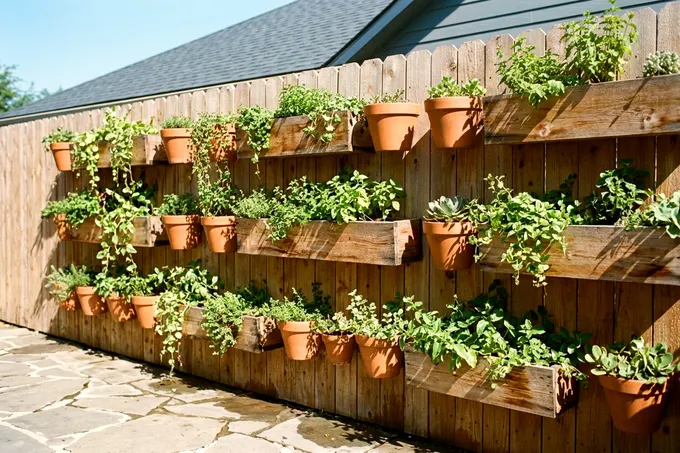
Standard rain gutters make excellent shallow planters when you mount them horizontally on a blank wall. Aluminum or vinyl gutter sections are usually inexpensive at the hardware store. They come in long pieces you can cut with a hacksaw to fit your exact space. Gutters hold enough potting mix for shallow root systems like radishes, chives and small succulents.
Cap both ends of the gutter tightly so the wet dirt stays inside. Drill plenty of small drainage holes along the bottom edge. Fasten the metal or vinyl rail directly to wall studs using standard gutter brackets. Space multiple horizontal rows far enough apart that the plants on the bottom get plenty of overhead sunlight.
Paint the outside of the gutters to match your exterior siding. The shallow metal pans heat up quickly in direct afternoon sun. Check the soil often and water the gutters thoroughly before the dirt pulls away from the sides.
6. Freestanding frame for a bare patio
A freestanding wooden A-frame gives you a vertical garden without drilling any holes into your siding or fence. A broad base helps keep the structure stable on flat ground. The sloped wooden sides hold hanging troughs, long window boxes or simple hooks for pots. You can set this up anywhere and move it across the yard if your plants need more shade.
Build the frame out of outdoor rated lumber to resist rot, and check the label if you plan to grow edibles in it. You can position the tall frame as a living privacy screen between your seating area and the neighbor's yard. If you have a small backyard on a tight lot, a freestanding frame adds planting space without blocking your narrow walking paths.
Attach locking caster wheels to the bottom legs so you can roll the heavy frame around the patio. Lock the wheels once you find a sunny spot.
7. Hanging baskets at different heights
Hanging baskets create a floating garden when you suspend them from a porch roof or a heavy tree branch. Hanging them at staggered heights turns empty air space into a solid block of bright color. Trailing plants like ivy, fuchsia and petunias spill over the sides and hide the containers entirely.
Use hooks and chain rated for the weight of wet soil, and make sure the porch roof or branch can hold it. Line wire baskets with coconut coir to keep the dirt inside while letting the plant roots breathe. Solid plastic hanging pots hold moisture longer but lack the classic garden look of a wire basket.
Hanging plants dry out very quickly in the wind. You will need to water them often and take them down before a heavy storm blows through. Grouping several baskets close together can help them hold moisture on hot afternoons.
Keep a vertical garden watered without a mess
Watering plants on a wall often sends muddy water dripping down your siding and pooling on the ground. A basic drip irrigation system can help by delivering water directly to the soil through tiny plastic tubes. You hook the main hose to your outdoor faucet and run thin feeder lines to each pocket, pot or gutter rail.
Set a simple battery timer on the faucet to water the plants for a short time every morning. The slow drip gives the dry soil time to absorb the moisture before it spills over the edges. If you choose to water by hand, use a long watering wand with a gentle shower setting. Start at the top tier and let the runoff water the plants below.
Protect your house by leaving a clear air gap between the planters and the siding. Constant moisture trapped against a wall can rot wood trim and leave ugly stains on brick. Place a thick layer of landscape gravel on the ground beneath the vertical garden. The stones will help catch stray drips and cut down on mud splashing back onto your house.