- Wild Style Magazine
- Driveways and Paving
- Driveway pavers that hold up under cars and winters
Driveway pavers that hold up under cars and winters
Find out which driveway pavers hold up under heavy cars and freezing winters so you can plan a durable paver driveway installation for your home.
Words by Rory Sundquist6 min to read
A driveway paver holds up under vehicle weight and winter weather when it sits on a deep, compacted gravel base. You need thick pavers explicitly rated for vehicular traffic to handle heavy cars. A strong edge restraint and the right laying pattern keep the blocks locked together as tires turn on them.
Why a driveway needs a deeper base than a patio
A car weighs far more than outdoor furniture. You might know how to install a paver patio that stays flat under foot traffic, but a driveway requires a completely different foundation. A patio base is usually shallower, because it only carries chairs and people.
If you park a truck on that thin layer, the tires can push the pavers down and create ruts. A paver driveway usually calls for a deeper trench filled with compacted gravel under the sand setting bed, and soft, wet clay soils may call for even deeper excavation. This thick foundation spreads the heavy weight of the vehicle over a wider area of soil.
Ask the installer whether the plan includes a geotextile fabric over the exposed soil and which base material they use. Both depend on your site and soil.
The installer should compact the gravel in thin layers with a plate compactor, which helps keep the stones from settling under your car. A well compacted base is a major reason the surface stays flat. Paving over an old, failing concrete slab can lead to trouble, since cracks may transfer up to the pavers.
Concrete, clay and stone pavers for vehicle loads
Common choices for driveways include concrete, clay brick and natural stone. If you are debating between an asphalt or concrete driveway, standard concrete driveway pavers offer an alternative with a more tailored look. Concrete pavers tend to be uniform in size and shape.
This exact sizing allows them to interlock tightly, sharing the heavy load across multiple blocks. Concrete options come in many colors and textures, including finishes that mimic natural stone.
Clay pavers are fired in kilns. Ask the supplier about their strength and color, and confirm they are rated for vehicles.
Check the supplier's data on water absorption and freeze-thaw performance for your climate.
Natural stone like granite or cobblestone offers a historic look. Stone can cost more. The pieces vary slightly in size, thickness and texture. This can mean more leveling work for the installer.
Avoid large, thin stone flags or indoor ceramic tiles. Thin materials may crack under heavy tires. Always verify with the supplier that your chosen material is rated specifically for vehicular traffic.
Paver thickness, shapes and laying patterns
Driveway pavers are usually thicker than walking path materials. The blocks need enough vertical mass to handle the weight of passenger cars. If you park a heavy pickup truck or a delivery van, you need pavers explicitly manufactured for heavy loads.
The shape of the block matters too. Smaller, thicker pavers are often used for driveways because they interlock and spread loads. Ask your installer which size and thickness the manufacturer rates for vehicles.
The pattern you arrange the blocks in controls how the surface reacts to tires. A herringbone pattern points the pavers at diagonal angles to the flow of traffic. This zigzag layout helps the blocks interlock.
When a car accelerates, brakes or turns its wheels sharply, a herringbone pattern helps resist shifting. Straight lines and running bond patterns look clean but may resist shifting less under braking.
The blocks sit on a thin layer of coarse concrete sand. This sand bed gives the pavers a smooth surface to rest on. It also compensates for minor differences in block thickness.
You sweep fine jointing sand over the finished surface and run a plate compactor over the top. The compactor vibrates the blocks, driving sand deep into the joints and locking the entire driveway together.
Permeable pavers and where the rain goes
Traditional pavement sends rainwater running off the surface. A permeable surface lets water soak in on your property instead. The EPA lists pervious asphalt, pervious concrete, interlocking pavers and plastic grid pavers as alternatives to traditional pavement.
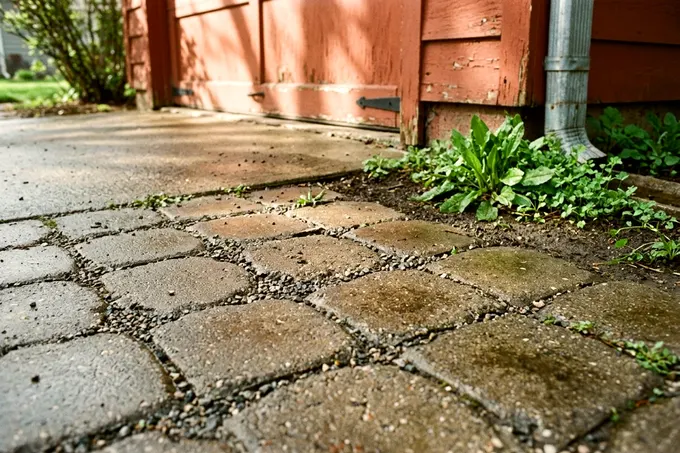
Permeable pavers look similar to standard blocks, but they leave wider gaps that are filled with small, clean crushed stone instead of fine sand. Follow the manufacturer's instructions.
The base underneath also changes. A permeable base is typically built with open-graded stone that leaves voids for water, so follow the manufacturer's and designer's specifications.
The EPA says permeable pavement lets rain and snowmelt seep through the surface down to underlying layers of soil and gravel. Water collects in the open spaces of the stone base until the soil absorbs it. How well this works depends on your soil and the design, so ask the installer.
Runoff from roofs and cars often carries dirt, oil and lawn chemicals. The EPA says permeable pavement can help filter out pollutants that contribute to water pollution. Ask the installer how the system will be kept clear and maintained.
Edges that stop your pavers from creeping
A paver driveway relies on interlock. The blocks press against the sand joints, and the outside blocks press against an edge restraint. Without a strong, permanent edge, the weight of vehicles can push the outer blocks outward, and the joints can open up.
Plastic edging spiked into the ground works for backyard garden paths, but a driveway usually calls for a sturdier edge restraint. Some installers set a concrete edge along the perimeter to hold the outside row in place.
Rigid metal edge restraints are another option. Ask the installer which system they use and how it is anchored. You might use light materials for keeping garden beds neat, but driveway edges must withstand the lateral force of a turning car.
The transition points need extra attention too. Where the pavers meet the garage floor, the surface must sit perfectly flush so you avoid a bump. At the bottom of the driveway, the pavers may meet a concrete apron or an asphalt street.
Ask the installer how the last row near the street will be secured against snowplows.
Snow, salt and plows on a paver driveway
Pavers can handle winter weather because the sand joints allow some movement. Ask your installer how the base is built for freeze and thaw in your climate.
Check the paver manufacturer's advice on shovels, snowblowers and other snow removal tools before the first storm.
If you hire a professional plow service, tell them you have pavers. Ask them to set up the plow so it will not catch block edges or scratch the surface.
Some de-icing chemicals can damage some pavers, so check the paver manufacturer's guidance on which products to use.
Permeable installations can offer a winter advantage. Because melting snow can seep through the surface, water may pool less. The EPA says permeable pavement can reduce the need for road salt. Using less salt may also be easier on your pavers and lawn.
Questions to ask your paver installer
A contractor can handle the heavy base excavation and compaction. Before digging begins, have underground gas, water and electrical lines located and marked through your local utility locating service. Contact your local building department about permits.
Some towns limit how much hard surface a lot can have, so ask your building department how that affects your permit.
Ask each installer these questions about materials and methods.
- How deep do you excavate for the base gravel on a residential driveway?
- What equipment do you use to settle the base material completely?
- Which specific edge restraint system do you install to stop the perimeter from spreading?
- Are the exact pavers in your quote rated by the manufacturer for vehicle traffic?
- Do you lay the blocks in a true interlocking herringbone pattern?
- What kind of joint sand do you sweep between the blocks to lock them tight?
- Do you handle the permit process and schedule the underground utility markings?
Polymeric sand is one option for the joints of a standard driveway, so follow the manufacturer's instructions. Ask the installer if their quote includes polymeric sand and a final compaction pass over the finished blocks. A clear contract outlining these details helps you compare quotes and protects your budget.