- Wild Style Magazine
- Driveways and Paving
- Asphalt or concrete driveway and how to choose
Asphalt or concrete driveway and how to choose
Pick the right surface for your home with this asphalt vs concrete driveway comparison covering climate, upfront costs, lifespan and repair work.
Words by Rory Sundquist6 min to read
Concrete is often chosen in hot climates, where asphalt can soften in the sun, and asphalt is often chosen where winters are freezing. Local paving contractors can tell you which has held up best near you. The right choice depends on the weather in your state and how much upkeep you want to do.
How concrete and asphalt driveways are built
Every solid driveway starts with the dirt underneath. You cannot pour pavement directly on grass. A crew digs out the old driveway and removes the topsoil to reach firm subsoil. The crew grades the dirt so water flows away from your house, which matters because NAPA calls standing water the leading cause of driveway failure.
The crew puts down a stone base of crushed gravel. They use heavy machines to compact this stone. A solid base stops the finished driveway from sinking later. Learning how to install a paver patio that stays flat requires this exact same gravel foundation.
From here, the two materials take different paths because asphalt goes down hot. Trucks deliver a mixture of liquid asphalt and small stones, and the crew spreads this blacktop over the gravel base before rolling it flat. The material cools and hardens fast. Ask your contractor how long to keep cars off a new asphalt driveway.
Concrete is a mixture of cement, sand, gravel and water. The crew sets wooden boards to form a mold and may lay down steel reinforcement. Concrete trucks pour the wet mixture into the forms, and workers use long tools to smooth the top. Concrete needs time to cure, so ask your contractor how long to keep cars off a new concrete driveway.
Measuring the lifespan of your investment
Concrete often costs more upfront, so get written quotes for both materials. The American Cement Association says concrete pavements have an average service life of 30 to 50 years. Lifespan also depends on the base, drainage and upkeep, so ask each contractor what to expect.
Asphalt often costs less to install, and it may need more patching and sealing over the years. Ask contractors for the expected lifespan of each option.
Compare written quotes for both materials and ask each contractor how long the surface should last with the upkeep you plan to do.
Cold winters and road salt against hot summers
Weather destroys paved surfaces over time. The state you live in should drive your final decision.
Hot summers can be hard on asphalt because the dark surface absorbs heat and may soften. Tires or a kickstand can leave dents in soft asphalt. Concrete does not soften that way.
Freezing and thawing can move the soil in northern states, and a rigid slab can crack when it does. Ask local contractors how each material has fared in your winters.
Ask your contractor how each surface handles snow removal and plowing in your area.
Road salt and other deicers are another winter concern. Check with your contractor and the product label about which deicers are safe for your surface.
Handling cracks, joints and oil stains
Every pavement gets dirty. Every driveway cracks eventually. The materials handle these problems very differently.
Concrete shrinks as it cures and hardens, causing stress in the slab. The American Cement Association says joints are cut into concrete paving, typically by sawing, to control cracking. These straight lines give the slab a weak point. When joints are designed and built correctly, cracks occur below the joint where you cannot see them.
When unpredictable surface cracks happen in concrete, they look bad. Concrete can be hard to patch so the repair blends in, so ask a contractor about repair options.
Oil, fluids and other spills can stain concrete, so clean spots promptly and follow the cleaner's label.
Dark asphalt may show oil drips and tire marks less than concrete. Small cracks can often be sealed with a crack filler made for asphalt, following the label directions.
Sealing the surface to block out water
Concrete generally asks for little routine upkeep. Sweep off the dirt and wash it when it looks bad. Ask your contractor whether a clear concrete sealer suits your slab and how often to apply it.
Asphalt demands regular chores. Many contractors recommend sealcoating an asphalt driveway, so ask yours whether to do it and when. The right schedule depends on the mix and your climate.
Follow your contractor's and the sealcoat product's instructions for timing, weather, surface prep and how long to stay off the driveway.
Ask your contractor for a maintenance schedule, since skipped upkeep can shorten the life of any pavement.
Water drainage causes most driveways to fail
The National Asphalt Pavement Association says standing water is the leading cause of driveway failure. Standing water can damage the surface over time.
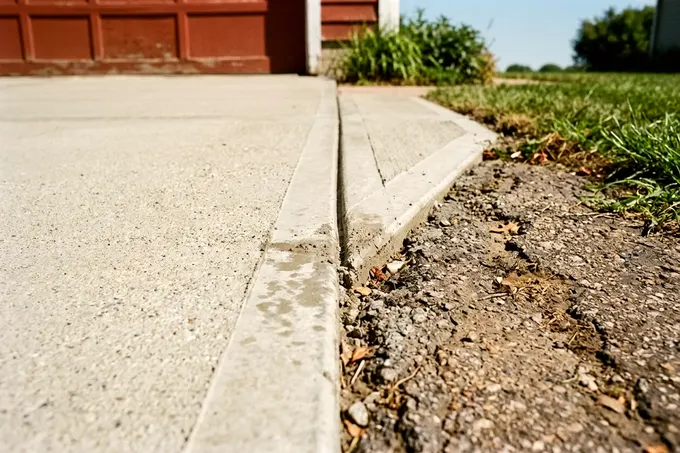
Water that seeps under the edges can wash out the stone base and leave the pavement without support.
Good drainage starts before the paving begins. The base should slope away from your house so water drains. Ask the crew how they plan to grade the driveway to shed rain.
Sometimes a yard slopes down toward the house, which may call for extra drains. Ask the contractor who handles drainage, as NAPA advises spelling out in the contract. If your property suffers from constant mud, you might research what gravel works best for a driveway because gravel lets rain pass directly into the soil.
How thick a standard driveway should be
The driveway must handle your vehicles without sinking.
A concrete driveway for standard passenger cars needs sufficient thickness to support daily use. The contractor pours this over a solid base of crushed stone. Heavy RVs or large trucks may need a thicker slab, so tell your contractor what you park.
Asphalt driveways use different layers. Asphalt driveways are often built in layers, so ask your contractor which layers and what thickness they plan.
The edges of any driveway take a beating. Tires roll off the side and break the brittle edges. Ask your contractor how the edges will be supported.
Checking local permits and neighborhood rules
You cannot just start tearing up your yard, so you check local rules first. Many local building departments require a permit to replace a driveway, so call yours first.
The town may review the curb cut, the spot where your private driveway meets the public road and sidewalk. Rules on drainage and sidewalks vary, so ask your building department.
Your neighborhood might have rules too, as homeowner associations often dictate exterior materials. Some associations restrict driveway materials or colors. Others might ask you to review driveway pavers that hold up under cars and winters for an upscale look. Check your deed restrictions before you hire a crew.
What to put in your driveway contract
The best material fails if a bad crew installs it. Get estimates from three local companies. Be cautious of any crew that knocks on your door offering leftover material.
You need everything in writing. The National Asphalt Pavement Association advises that an asphalt driveway contract include the pavement thickness, who handles site preparation and drainage, a payment schedule and a clear warranty. Ask for the same details on a concrete job.
A thin stone base can shorten a driveway's life. Make sure the contract spells out how many inches of stone and pavement you get. You also want a specific timeline for the work.
Always verify past work. NAPA suggests asking a contractor for driveways they paved at least two to three years ago to see how the work holds up. A fresh pour looks great on week one, but a driveway that survived rough winters shows you the truth. Drive past those older jobs and find another crew if you see wide cracks or sinking spots.