- Wild Style Magazine
- Deck Building
- Wood or composite deck boards and how to choose
Wood or composite deck boards and how to choose
Find the right deck boards for your yard with our breakdown of wood and composite options. Compare upkeep, lifespan and fastening rules before you buy.
Words by Reuben Stillwagon6 min to read
Pressure treated pine is usually the lowest cost way to surface a deck, while composite and PVC boards usually cost more upfront but skip the staining. Cedar, redwood and tropical hardwoods offer a natural look that asks for regular upkeep. Your choice comes down to budget and maintenance.
The short answer by budget and upkeep
You have three paths for a deck surface. Treated lumber is usually the low budget option, and it needs regular sealing. Cedar and tropical woods usually cost more and give a rich natural grain.
They also require steady maintenance. Synthetic boards usually need the biggest budget upfront. Composite and PVC skip the staining and sealing, though they still need washing. You trade a higher initial price for less upkeep later.
Pressure treated pine
Pressure treated southern yellow pine is a common deck board in the United States. It is usually inexpensive and easy to find. The treatment process forces chemicals into the wood fibers. This helps the wood resist rot and insects.
The wood often arrives wet from the treatment plant. It feels heavy and looks green or brown. Ask your supplier how long to let it dry before you seal it. As it dries in the sun, pine tends to shrink.
It can warp, cup and twist. Buy a few extra boards for your project. Some pieces in the pile may be warped, so sort through them.
You will often see small splits form along the grain. These are called checks and are common in drying wood. Treated pine can splinter over time.
It is not the best choice for bare feet. Clean and seal it as the product label directs to slow graying and cracking. Look for premium boards with fewer knots and a straight grain to save yourself headaches during the build.
Cedar and redwood
Cedar and redwood bring natural beauty to your yard. Both woods have some natural resistance to rot and insects. They often cost more than treated pine, and prices vary, so compare quotes.
Redwood has a deep red tone. Cedar offers a lighter amber color. When shopping, you will see a difference between heartwood and sapwood. Heartwood comes from the center of the tree.
Ask your supplier which part of the tree your boards come from. Both woods are relatively soft, so they can scratch and dent.
Sunlight and rain can turn these woods silvery gray if left alone. A clear or tinted sealer can help hold the original color, so follow the product label for how often to reapply.
The upkeep pays off if you want real wood grain.
Tropical hardwoods
Tropical woods are dense hardwoods. Ipe, mahogany and tigerwood are popular choices. Many resist rot and insects well, but lifespan varies by species and care.
These boards are very heavy. You will notice the weight the second you lift one. The wood is so hard that it can dull standard saw blades.
Dense hardwoods usually need pre-drilled holes, so follow the board maker's fastening instructions. Expect the install to take longer.
Tropical hardwood usually costs more than pine. It provides a luxury finish and can last a long time with care. The dark natural colors can fade to gray in the sun unless you finish them.
Oil tropical wood as the maker directs to keep it looking dark and rich. Ask the board supplier which finish to use.
Composite and PVC boards
Synthetic decking skips the staining and sealing. Wash it as the maker directs.
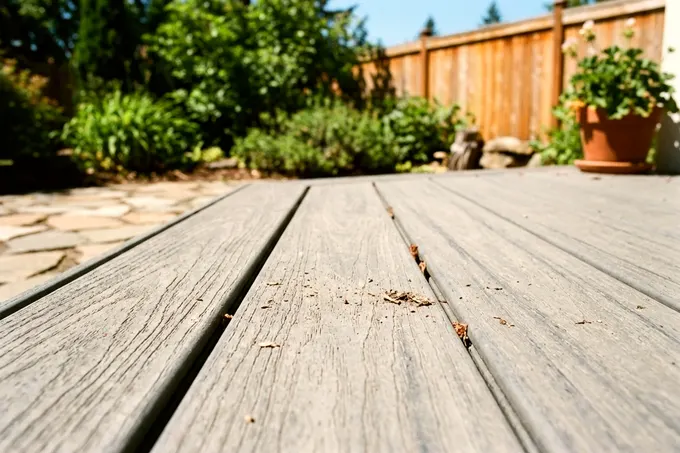
Composite boards blend wood fibers with recycled plastic. Some boards have a protective plastic cap that is meant to resist stains.
PVC decking is entirely plastic. It contains no wood fibers at all. Both materials resist rot and insects. Check the maker's warranty for what it covers on splitting, staining and fading.
These boards usually cost more than treated pine. Follow the maker's rules for joist spacing and frame flatness, which can differ from wood decking.
Both materials expand and contract with temperature changes. Follow the maker's gap instructions at the board ends so they can move. Pick a color you love before you buy. Check with the maker before painting or staining synthetic boards.
Older decks and treated wood safety
Tearing out an old deck requires caution. Wood treated with chromated arsenicals was used in residential decks before 2004. Makers stopped producing it for homeowner use in December 2003, according to EPA.
This older wood contains arsenic. EPA says not to burn CCA or other preservative treated wood in a residential setting, and to check with your local waste program on disposal.
If you are cutting up an old frame, protect yourself from the dust. EPA advises wearing goggles and a dust mask when sawing CCA treated wood and washing your hands after handling it.
Always inspect your existing joists before putting down new boards. If the old frame shows rot or soft spots, have a pro check it. Do not put expensive new decking over a failing structure. Grab an awl or a screwdriver and poke the tops of the joists to check for soft and spongy wood.
Gaps, fasteners and joist spacing
Your local building department sets the final requirements for your area. They may point to national standards.
The American Wood Council's DCA 6 deck guide covers the basic requirements. It calls for decking of 2-inch nominal dimension lumber or span rated decking products. Make sure your joists are close enough to support the boards you buy. You can review the details for your deck joist spacing and span before you start.
For lumber or span rated decking, DCA 6 lists a few rules for laying down your surface:
- Each segment of decking must bear on at least three joists or supports.
- Attach decking to each joist with two 8d threaded nails or two #8 screws.
- Space boards about 1/8-inch apart.
That 1/8-inch gap allows water to drain and lets dirt wash through. Without a gap, debris builds up and holds moisture against the wood. When two boards meet end to end, they must land directly over a joist. Each board ends halfway across the joist so the next board can share the support.
Use fasteners rated for outdoor use and for the wood or treatment you have, and check the label. Do not use drywall screws, which are not made for outdoor decks.
Many synthetic boards use hidden clip systems instead of screws driven through the top face. If you use hidden fasteners, you must follow the manufacturer instructions for spacing and spans to meet building codes.
Heat, slip and color fade
Think about how you use your yard before you buy. If your deck faces south and gets full afternoon sun, heat becomes an issue.
Composite boards can get hot in direct sunlight, and darker colors tend to get hotter. They can get too hot for bare feet or dog paws, so check the maker's heat guidance and test a sample in the sun.
If you want dark composite, consider adding a structure for shade. You can look at pergola ideas for shade over a patio or deck to keep the surface comfortable.
Wet boards can get slippery, and mildew can make them worse.
Some composite and PVC boards have a molded grain for grip. Check the maker's cleaning instructions to keep traction up.
Color fade happens to everything outdoors. Wood changes color over time, and a sealer can slow it. Synthetics can also fade, so ask the maker about its fade warranty.